


Consistent bottle quality begins long before the first bottle is blown. It starts with a precisely engineered PET preform mould.

What Is a PET Preform Mould?
A PET preform mould is a precision injection mould used to produce the intermediate components from which plastic bottles are manufactured. Each preform already contains its finished neck and thread, while its body is subsequently reheated and stretch-blown into the required bottle shape.
The mould directly influences preform dimensions, wall thickness distribution, surface appearance, neck accuracy and production consistency. For bottled water, carbonated drinks, edible oils and other packaging applications, a well-designed PET preform mould helps maintain reliable downstream blowing performance.
Unlike general-purpose plastic tooling, a high-performance PET preform mould must withstand continuous production, repeated thermal cycles and demanding dimensional requirements. Its cavity arrangement, hot runner system, cooling channels and precision-fitted components must work together.
Main Components of a PET Preform Mould
Understanding the mould structure helps buyers evaluate technical proposals and identify potential maintenance requirements.
| Component | Primary Function | Key Consideration |
|---|---|---|
| Core | Forms the inner surface of the preform | Concentricity, finish and wear resistance |
| Cavity | Defines the external preform geometry | Dimensional accuracy and surface quality |
| Neck ring | Forms the neck finish and thread area | Cap fit and sealing consistency |
| Hot runner system | Distributes molten PET to the cavities | Balanced filling and temperature control |
| Cooling system | Removes heat from moulded preforms | Uniform cooling and cycle stability |
| Take-out system | Transfers finished preforms | Reliable handling and automation compatibility |
These components must be engineered as an integrated system. For example, an accurately machined cavity cannot compensate for an unbalanced hot runner, while efficient cooling alone cannot correct an incorrectly designed neck finish.
How Cavity Number Affects Production Capacity
The number of cavities determines how many preforms can be produced in one injection cycle. However, choosing a high-cavity PET preform mould should involve more than comparing the cavity count.
Buyers need to consider the injection moulding machine, required hourly output, preform weight, cooling performance, available installation space and expected operating schedule.
| PET Preform Mould | Typical Application | Main Purchasing Consideration |
|---|---|---|
| 48 cavity | Growing production lines and established bottle plants | Balanced investment and output |
| 72 cavity | Medium-to-high-volume production | Machine capacity and cycle stability |
| 96 cavity | Large-scale beverage packaging | Filling balance and cooling efficiency |
| 128 cavity | High-volume industrial production | Precision across all cavities |
| 144 cavity | Demanding, continuous mass production | Integrated system performance and maintenance access |
The configurations above represent common purchasing options rather than fixed output guarantees. Actual production rates depend on the preform design, injection system, cooling conditions and validated cycle time.
For manufacturers planning capacity expansion, the right high-cavity PET preform mould should meet current production requirements while allowing practical long-term operation.
Critical Factors in PET Preform Mould Design
Every cavity must reproduce the specified geometry consistently. Variations in neck dimensions, concentricity or preform weight can affect cap fitting, bottle wall distribution and downstream blowing performance.
Precision machining, component inspection and controlled assembly are therefore essential. Buyers should request inspection records for critical dimensions and clarify the acceptance criteria before production begins.
A balanced hot runner system helps distribute molten PET consistently among cavities. Temperature variation or uneven material flow can contribute to differences in preform quality.
Cooling design is equally important. Efficient and uniform heat removal supports stable cycle times and helps prevent dimensional distortion or unwanted crystallisation. The optimum design depends on the resin, preform geometry and intended production conditions.
Mould steel selection should reflect the required service life, production volume and component function. Surface treatment can improve wear resistance and support stable operation where appropriate.
A professional PET preform mould manufacturer should be able to explain the material and treatment choices for critical components rather than relying solely on general durability claims.


Quality Standards Buyers Should Evaluate
A supplier's machining accuracy is important, but the finished preforms and the mould's performance in production are equally significant.
| Quality Item | Why It Matters | What Buyers Should Confirm |
|---|---|---|
| Critical dimensions | Ensures conformity with bottle and cap specifications | Measurement reports and agreed tolerances |
| Preform concentricity | Supports consistent material distribution | Inspection method and acceptance limits |
| Surface finish | Reduces visible defects and supports product appearance | Sample inspection criteria |
| Acetaldehyde (AA) | Important for beverage packaging quality | Resin, processing conditions and test requirements |
| Cooling consistency | Influences cycle stability and dimensional control | Cooling design and trial results |
| Cavity-to-cavity variation | Affects consistency during mass production | Sampling plan and capability data |
Process capability indicators such as CmK or Cpk should be interpreted according to the specific measurement method, sample size and production conditions. Buyers should also distinguish between tooling specifications and results demonstrated during actual production trials.
Why Choose SZ-MOLDTECH (Jiaxing) Co., Ltd.?
SZ-MOLDTECH (Jiaxing) Co., Ltd. specialises in PET preform mould design, manufacturing and related tooling services. By integrating engineering development, precision machining, assembly, inspection and project support, the company serves manufacturers seeking dependable tooling for beverage and other PET packaging applications.
According to its published company information, SZ-MOLDTECH has more than 22 years of PET preform mould experience, a manufacturing facility of approximately 6,000 m², a team of more than 60 skilled professionals and an annual production capacity of approximately 3,300 cavities. Its current website also describes a 76-employee team and exports to 18 countries and regions.
Integrated Manufacturing and Engineering
SZ-MOLDTECH develops mould solutions around actual preform drawings, machine specifications and output targets. Its product range includes 48, 72, 96, 128 and 144 cavity PET preform moulds, with configurations subject to technical review.
The company also supplies cold half and hot half assemblies, cores, cavities, neck rings and end-of-arm tooling (EOAT). These capabilities allow customers to address new mould projects and selected component requirements through one specialist supplier.
Precision Control and Material Management
SZ-MOLDTECH reports working with established steel suppliers, including UDDEHOLM, Bosch Gotthards Huette and Schmiede Werke Gröditz GmbH, and cooperating with Oerlikon Balzers on surface treatment technologies.
Its published specifications include mechanical fitting tolerances of ≤0.005 mm for specified components and mould shoe geometric tolerances of ≤0.01 mm. These values should be confirmed against the scope and technical drawings of each project.
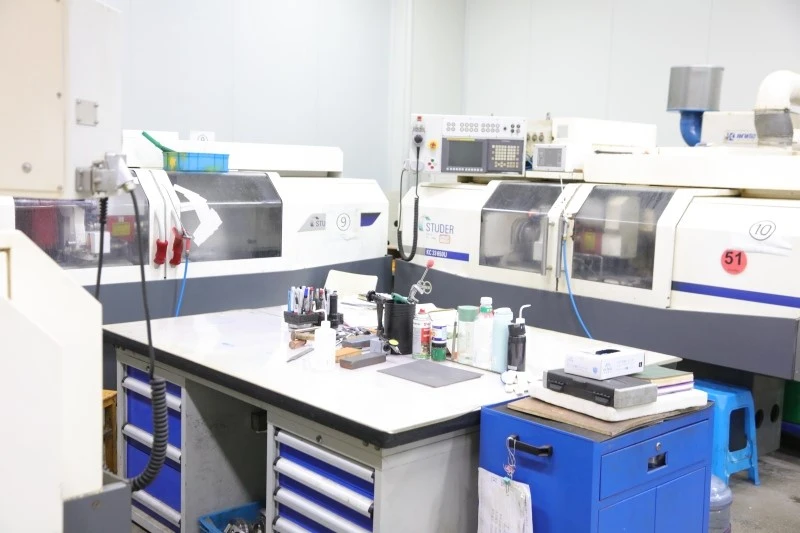
The company also describes the use of coordinate measuring machines, precision vision measurement systems and other inspection equipment to verify component accuracy throughout manufacturing.
New Moulds, Refurbishment and Conversion
Not every production requirement calls for a completely new mould. Depending on the existing tooling condition and machine configuration, refurbishment may restore performance, while mould conversion can adapt tooling to revised preform designs or production requirements.
| Service | Suitable Situation | Potential Benefit |
|---|---|---|
| New PET preform mould | New production line or bottle design | Tooling designed around project requirements |
| Mould refurbishment | Worn or deteriorating existing tooling | Restored accuracy and reduced replacement expenditure |
| Mould conversion | Revised preform design or process requirements | Extended use of suitable existing equipment |
| Component supply | Replacement of critical mould parts | Targeted maintenance and repair |
With engineering review, documented project requirements and agreed acceptance criteria, SZ-MOLDTECH helps customers assess the practical options before committing to a tooling investment.


How to Select the Right PET Preform Mould Supplier
Before placing an order, buyers should prepare the preform drawing, neck-finish standard, resin information, target output, machine model and current production challenges.
A qualified PET preform mould supplier should review these details, explain the proposed cavity layout and identify any compatibility limitations. The quotation should clearly state the scope of supply, technical tolerances, inspection requirements, trial arrangements, delivery schedule and after-sales responsibilities.
Machine compatibility must be confirmed by the supplier's engineering team. A mould that fits the general machine category may still require verification of interfaces, pitch layout, hot runner connections and take-out arrangements.
Comparing suppliers on these points gives buyers a more reliable basis for evaluating total tooling cost, production stability and long-term maintenance requirements.
Conclusion
Selecting a PET preform mould is an engineering decision that affects product quality, production efficiency and ongoing operating costs. Cavity count, dimensional accuracy, hot runner balance, cooling performance and machine compatibility should all be assessed together.
SZ-MOLDTECH (Jiaxing) Co., Ltd. offers PET preform mould manufacturing, precision component supply, refurbishment and conversion services for different production requirements. Buyers planning a new mould or upgrading existing tooling can submit their preform drawings, machine details and target output for a project-specific technical assessment.
A properly specified mould, supported by verifiable quality controls and practical engineering service, provides a stronger foundation for consistent PET bottle production.
Frequently Asked Questions About PET Preform Mould Purchasing
Provide the preform drawing, neck-finish dimensions, weight, resin type, target hourly output, injection moulding machine model and required cavity count. Existing mould drawings and production samples are also useful when replacing or converting tooling.
Yes, subject to engineering confirmation. The supplier must verify machine interfaces, cavity pitch, hot runner connections, mould dimensions and take-out arrangements before confirming compatibility.
Select a mould with controlled cavity machining, balanced material distribution, uniform cooling and documented inspection procedures. Production trials should verify preform dimensions, weight variation and other agreed quality indicators across the cavities.
It can be, depending on component wear, structural condition, spare-part availability and the required production standard. A technical assessment should identify which components can be repaired or replaced and whether refurbishment can meet the required performance criteria.
Service life depends on mould steel, surface treatment, operating conditions, maintenance quality, resin processing and production cycles. Regular cleaning, correct assembly, cooling-system maintenance and timely replacement of worn components help protect mould performance.
Confirm the machine compatibility, validated output target, critical dimensional tolerances, hot runner and cooling specifications, trial acceptance criteria, spare-parts arrangements and technical support. These details help ensure that the mould meets the actual production requirement rather than only the nominal cavity specification.


