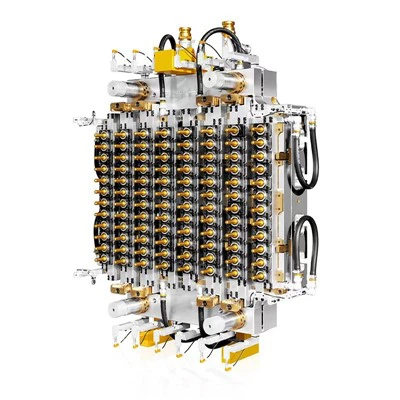


As a PET Bottle Preform Mould supplier, I'm often asked about the working principle of a hot - runner PET bottle preform mould. In this blog, I will delve into the details of this fascinating technology, sharing its science, operation, and significance in the plastic molding industry.
Introduction to Hot - Runner PET Bottle Preform Moulds
Before we start exploring the working principle, it's essential to understand the role of PET bottle preform moulds. PET (Polyethylene Terephthalate) is a widely used plastic material for packaging due to its lightweight, transparent, and recyclable properties. Preform moulds are used to create the initial shapes of PET bottles, which are then blown into their final bottle forms.
A hot - runner system in a PET bottle preform mould is a crucial component that helps in the efficient and high - quality production of preforms. It allows the molten plastic to flow from the injection unit to the cavities of the mould at a consistent temperature, ensuring uniform filling and reducing waste.
The Components of a Hot - Runner PET Bottle Preform Mould
A hot - runner PET bottle preform mould consists of several key components, each playing a vital role in the overall operation:
-
Hot Runner Manifold: The hot runner manifold is like the “artery” of the system. It distributes the molten plastic from the injection unit to multiple cavities evenly. The manifold is heated to maintain the plastic in a molten state, preventing it from solidifying during the flow. Specialized heating elements are embedded in the manifold to ensure precise temperature control.
-
Nozzles: The nozzles are the final points through which the molten plastic enters the mould cavities. They are designed to provide a smooth and controlled flow of plastic. The tip of the nozzle is in direct contact with the preform cavity and needs to be carefully designed to avoid any plastic leakage or drooling. Some nozzles are open - tip, while others are valve - gated. Valve - gated nozzles offer better control over the plastic flow and can prevent the formation of cold slugs at the gate area.
-
Mould Cavities: The mould cavities are where the preforms are actually formed. They are precisely machined to the desired shape and size of the preforms. The number of cavities in a mould can vary depending on the production requirements. For example, we offer 96 Cavities PET Preform Mold, which can significantly increase the production efficiency.
-
Cooling System: A cooling system is essential to solidify the molten plastic in the cavities quickly. Cooling channels are drilled around the cavities to circulate coolant, usually water. Efficient cooling ensures that the preforms can be ejected from the mould in a short time without deforming, thus increasing the production cycle time.
The Working Process of a Hot - Runner PET Bottle Preform Mould
Step 1: Plastic Melting and Injection
The process starts with the plastic pellets being fed into the hopper of the injection molding machine. The pellets are then conveyed into the heating barrel, where they are melted by the heat generated by the barrel heaters and the shearing action of the screw. Once the plastic reaches the appropriate molten state, the screw moves forward, injecting the molten plastic into the hot runner system.
Step 2: Plastic Distribution in the Hot Runner Manifold
The molten plastic enters the hot runner manifold, which is maintained at a specific temperature to keep the plastic flowing smoothly. The manifold has a series of channels that distribute the plastic evenly to multiple nozzles. The design of the manifold is critical to ensure that each cavity receives an equal amount of plastic, which is essential for producing consistent preforms.
Step 3: Injection into Mould Cavities
The molten plastic is then pushed through the nozzles and into the mould cavities. The nozzles play a crucial role in controlling the flow rate and pressure of the plastic. In the case of valve - gated nozzles, the valve is opened to allow the plastic to enter the cavity and then closed to stop the flow once the cavity is filled. This precise control helps to avoid over - filling or under - filling of the cavities.
For different applications, we offer various types of moulds, such as PET Preform Mould for Oil Bottles and Juice Water Bottle Preform Mould. These moulds are designed to meet the specific requirements of different product packaging.
Step 4: Cooling and Solidification
Once the cavities are filled with molten plastic, the cooling system comes into play. Coolant is circulated through the cooling channels around the cavities, removing the heat from the plastic. This causes the plastic to solidify and take the shape of the cavity. The cooling process needs to be carefully controlled to ensure that the preforms have a uniform structure and are free from internal stresses.


Step 5: Ejection
After the plastic has solidified, the mould opens, and the finished preforms are ejected. Ejection mechanisms, such as ejector pins or stripper plates, are used to push the preforms out of the cavities. The ejected preforms are then collected and can be further processed, such as being sent to a blow - molding machine to be turned into actual bottles.
Advantages of Hot - Runner PET Bottle Preform Moulds
Using a hot - runner system in PET bottle preform moulds offers several advantages:
-
Reduced Material Waste: Since the plastic in the hot runner system remains molten between cycles, there is little or no waste in the form of cold runners. This not only saves material costs but also reduces the environmental impact.
-
Improved Product Quality: The consistent temperature in the hot runner system ensures uniform filling of the cavities, resulting in preforms with better dimensional accuracy and fewer defects. This is especially important for high - quality packaging applications.
-
Higher Production Efficiency: The elimination of the need to remove and process cold runners speeds up the production cycle. Additionally, the ability to use a large number of cavities in a single mould, such as our 96 - cavity moulds, further increases the output per unit of time.
-
Versatility: Hot - runner systems can be used with a wide range of plastics and can be customized to produce preforms of different shapes and sizes. This makes them suitable for various packaging applications, from small juice bottles to large oil containers.
Conclusion and Call to Action
Understanding the working principle of a hot - runner PET bottle preform mould is crucial for anyone involved in the plastic packaging industry. Whether you are a manufacturer looking to improve your production efficiency or a brand owner seeking high - quality packaging solutions, a reliable hot - runner preform mould is essential.
As a leading PET Bottle Preform Mould supplier, we have the expertise and experience to provide you with top - quality moulds that meet your specific requirements. Our 96 Cavities PET Preform Mold, PET Preform Mould for Oil Bottles, and Juice Water Bottle Preform Mould are just a few examples of our product range.
If you are interested in learning more about our PET bottle preform moulds or would like to discuss a custom project, please feel free to contact us. We are ready to assist you in finding the best solution for your packaging needs.
References
- Throne, James L. "Plastics Process Engineering." Marcel Dekker, 1996.
- Osswald, Tim A., and Todd Menges. "Materials Science of Polymers for Engineers." Hanser Publishers, 2003.