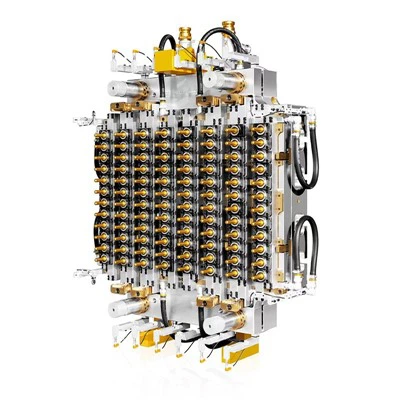


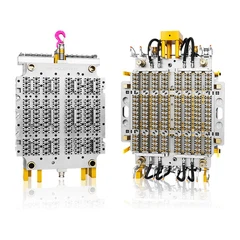


When it comes to the manufacturing of water bottle PET preforms, one crucial aspect that often goes unnoticed but plays a significant role in the production process is the weight of the PET preform molds. As a supplier of Water Bottle PET Preform Molds, I've had extensive experience and in - depth knowledge about this topic. In this blog, I'll delve into the factors influencing the weight of these molds, why it matters, and how it impacts the overall production.
Factors Affecting the Weight of Water Bottle PET Preform Molds
The weight of a water bottle PET preform mold is not a random number; instead, it is determined by several key factors.


1. Cavity Number
The number of cavities in a mold is one of the most significant factors affecting its weight. A cavity is the space within the mold where the PET preform is formed. More cavities mean more material is required to create the mold structure to accommodate them. For example, a 96 Cavities PET Preform Mold will be significantly heavier than a mold with fewer cavities, say 16 or 32. This is because the additional cavities need more steel or other materials for the construction of the mold body, cores, and other components.
2. Mold Material
The choice of material for the mold also has a direct impact on its weight. Most PET preform molds are made from high - quality steel alloys due to their excellent strength, wear resistance, and thermal conductivity. Different types of steel have different densities. For instance, tool steel, which is commonly used in mold making, has a density that can vary depending on its specific composition. A mold made from a denser steel alloy will naturally be heavier than one made from a less dense material.
3. Mold Design and Complexity
The design of the mold and its complexity play a role in determining its weight. A mold with a more intricate design, such as those with complex cooling channels, detailed part geometries, or special features for better preform ejection, will require more material. These additional components and structures add to the overall weight of the mold. For example, a mold designed for Pet Preform Molds for Carbonated Drinks Bottle might have a more sophisticated design to ensure proper preform shape and wall thickness, which could result in a higher weight compared to a simple mold for regular water bottles.
Why the Weight of PET Preform Molds Matters
1. Equipment Requirements
The weight of the mold directly affects the equipment needed for its operation. Injection molding machines need to be able to handle the weight of the mold. A heavier mold requires a more powerful injection molding machine with a larger clamping force. This is because the machine needs to hold the mold firmly in place during the injection process to prevent any movement or misalignment, which could lead to defective preforms. If the machine is not capable of handling the weight, it can cause premature wear and tear on the machine components, and even result in production downtime.
2. Transportation and Handling
Transporting and handling heavy molds can be a logistical challenge. Specialized equipment such as forklifts and cranes are often required to move these molds safely. The weight also affects the cost of transportation, as heavier molds require more fuel and larger vehicles. Additionally, during the installation and maintenance of the mold, the weight needs to be considered. Workers need to be trained to handle heavy molds properly to avoid accidents and injuries.
3. Energy Consumption
The weight of the mold can also impact energy consumption during the production process. Heavier molds generally require more energy to heat up and cool down. This is because there is more material to heat or cool, and it takes longer for the thermal energy to transfer through the thick sections of the mold. In a large - scale production environment, the increased energy consumption can significantly add to the production costs over time.
Impact on Production Efficiency
1. Cycle Time
The weight of the mold can influence the production cycle time. As mentioned earlier, heavier molds take longer to heat and cool. Since the cooling phase is a critical part of the injection molding process, a longer cooling time can increase the overall cycle time. This means that fewer preforms can be produced in a given period, reducing the production efficiency. Manufacturers need to find a balance between the number of cavities (which affects the weight) and the cycle time to optimize production.
2. Preform Quality
The weight - related factors such as the mold's ability to dissipate heat evenly can have an impact on preform quality. A heavy mold with proper cooling channels can ensure that the preform cools uniformly, resulting in a more consistent wall thickness and overall quality. On the other hand, a mold that is too heavy and cannot be cooled effectively may lead to uneven cooling, causing warping or other defects in the preforms.
Conclusion
In conclusion, the weight of water bottle PET preform molds is a multi - faceted aspect of the injection molding process. It is influenced by factors such as cavity number, mold material, and design complexity. The weight matters greatly in terms of equipment requirements, transportation, energy consumption, and production efficiency. As a supplier of PET Water Bottle Preform Mold, we understand the importance of these factors and strive to offer molds that strike the right balance between performance, weight, and cost.
If you are in the market for high - quality water bottle PET preform molds and want to discuss your specific requirements, we are here to help. Our team of experts can guide you through the selection process and provide you with the best solutions for your production needs. Contact us today to start a conversation about procurement and explore how our molds can enhance your production capabilities.
References
- "Injection Molding Handbook" by O. Oscar Kou, Hanser Gardner Publications
- "Mold Making Technology" magazine, various issues on PET preform mold manufacturing