


Consistent PET preform quality starts with the right combination of mould precision, process control and equipment performance.
PET preform production requires close coordination between injection moulding equipment, resin preparation, hot runner performance and mould design. Even when production parameters remain unchanged, wear, temperature imbalance or dimensional deviations can gradually affect product quality. The resulting defects may increase scrap rates, interrupt downstream bottle production and raise the cost per preform.
For beverage packaging manufacturers, identifying the source of a defect is more effective than repeatedly adjusting machine settings without a clear diagnosis. This guide explains common PET preform mould problems, practical troubleshooting methods and the engineering factors that buyers should evaluate when selecting a PET preform mould manufacturer.

Common PET Preform Mould Problems at a Glance
Different defects can produce similar symptoms, so operators should compare product samples from multiple cavities before making adjustments. The following table provides a practical starting point for production teams.
| Preform defect | Possible causes | Recommended checks |
|---|---|---|
| Flash along the parting line | Poor cavity closure, worn components or excessive injection pressure | Inspect the parting surfaces, alignment and clamping conditions |
| Incomplete filling | Insufficient injection pressure, restricted flow or temperature imbalance | Check resin drying, injection settings, gates and hot runner operation |
| Hazy or cloudy appearance | Excessive crystallisation, moisture or unsuitable thermal conditions | Verify resin preparation, melt temperature and mould cooling |
| Uneven wall thickness | Core eccentricity, inconsistent filling or component wear | Measure preform dimensions and inspect core-to-cavity alignment |
| Neck and thread defects | Neck ring wear, dimensional deviation or mould misalignment | Check thread geometry, sealing surfaces and neck ring condition |
| Black specks or streaks | Resin degradation, contamination or material residue | Inspect the resin handling system, barrel, screw and hot runner |
These checks should be performed systematically. Not every defect originates in the mould itself; material quality, machine condition and processing parameters must also be considered.
Flash Formation Around the Preform Parting Line
Flash appears as a thin ridge of excess plastic around the preform, commonly near the parting line. It can interfere with handling and create problems during subsequent processing.
Why it happens
Flash may develop when the mould cannot close uniformly, the mating surfaces are damaged, or the injection pressure exceeds the conditions the tooling can accommodate. In multi-cavity systems, a localised defect may indicate a problem affecting only one cavity or a specific section of the mould assembly.
How to troubleshoot it
First, determine whether flash appears across all cavities or only in selected positions. Inspect the parting surfaces for contamination, wear and damage, then verify mould alignment and clamping performance. Review the injection pressure profile only after mechanical causes have been assessed.
If the problem persists, inspect the affected components for dimensional changes. Simply increasing clamping force is not a universal solution, as excessive force can create additional mechanical stress.
Short Shots and Inconsistent Cavity Filling
A short shot occurs when a preform does not reach its intended shape because the cavity has not filled completely. In high-cavity PET preform injection moulding, inconsistent filling can result in a mixture of acceptable and rejected products within the same cycle.
Potential causes
The problem may be associated with inadequate melt temperature, insufficient injection pressure, restricted gate flow, poor hot runner temperature balance or incorrect machine settings. Resin moisture and material degradation can also influence processing behaviour.
Corrective actions
Compare samples from affected and unaffected cavities. If the defect is limited to certain cavities, inspect the corresponding flow paths and hot runner components. If all cavities are affected, examine the injection profile, resin condition and overall machine performance.
A balanced hot runner system is particularly important for high-speed PET preform moulds because it helps distribute melt consistently across the cavity layout. Temperature uniformity and flow behaviour should be assessed together rather than adjusted independently.
Hazy Preforms, Bubbles and Internal Voids
Clear PET preforms are essential for packaging applications where appearance and material integrity matter. Cloudiness, silver streaks, bubbles or internal voids may indicate problems with resin preparation or thermal control.
| Observed symptom | Possible explanation | First action |
|---|---|---|
| General haze | Premature crystallisation or unsuitable thermal conditions | Review melt temperature and cooling conditions |
| Silver streaks | Moisture or material-related degradation | Verify the resin drying process |
| Internal bubbles | Trapped gas or moisture-related defects | Inspect material preparation and venting conditions |
| Localised cloudy areas | Uneven cooling or inconsistent melt behaviour | Compare temperature conditions across affected cavities |
How mould design influences clarity
The cooling circuit, cavity surface finish and hot runner temperature distribution all affect the conditions under which PET solidifies. Poor temperature uniformity may create differences between cavities even when the machine settings appear stable.
Before changing several parameters simultaneously, establish whether the defect follows a particular cavity, production period or material batch. This makes it easier to distinguish tooling problems from resin and process issues.
Uneven Wall Thickness and Preform Eccentricity
Uneven wall thickness is especially important because the preform must stretch and distribute material correctly during stretch blow moulding. Significant eccentricity can contribute to uneven bottle walls, inconsistent strength and unreliable container performance.
What causes dimensional inconsistency?
Core-to-cavity misalignment is one possible cause. Other factors include worn inserts, incorrect assembly, inconsistent filling and variations in the thermal conditions around the mould.
The problem may not be obvious from a visual inspection alone. Dimensional measurement is needed to establish whether the core is centred and whether wall thickness remains within the agreed specification.
Recommended solution
Measure samples from representative cavities and record the results against cavity numbers. If one cavity repeatedly produces eccentric preforms, inspect its core, cavity and assembly interfaces. If the variation occurs across the entire mould, investigate the broader mould setup and injection process.
For buyers sourcing a high-cavity PET preform mould, dimensional consistency should be evaluated as a system-level requirement, not simply as an individual component tolerance.
Neck Finish and Thread Dimensional Defects
The neck finish determines how the preform interfaces with the cap and closure system. Defects in this area can lead to sealing failures, capping difficulties and rejection during downstream inspection.
Common symptoms include irregular threads, dimensional variation, damaged support rings and inconsistent sealing surfaces.
Troubleshooting procedure
Begin by checking neck dimensions against the specified closure standard and technical drawing. Inspect neck rings for wear, contamination and damage, then verify the assembly and alignment of the relevant components.
Also check whether the defect is consistent across all cavities. A repeated dimensional deviation may indicate a tooling specification or setup issue, while isolated defects may point to localised wear or damage.
When developing a new PET preform mould, confirm the neck finish drawing, thread standard, support ring dimensions and closure requirements before manufacturing begins. This reduces the risk of discovering compatibility problems during production trials.
Black Spots, Material Contamination and Surface Marks
Black specks and dark streaks can affect preform appearance and may indicate contamination or thermal degradation. Scratches and other surface marks may instead result from component damage, poor handling or problems during ejection.
How to identify the source
Inspect the defects under consistent lighting and record the affected cavity positions. Check resin storage and handling, the hopper, screw and barrel, as well as the hot runner and mould surfaces.
If marks repeatedly appear in the same position on preforms from one cavity, examine the corresponding mould surface and ejection path. If they appear randomly across production, investigate material contamination and machine cleanliness first.
Preventive maintenance should include cleaning, inspection of wear components and documentation of recurring defects. Replacing a mould component without identifying the actual source may solve the immediate symptom but leave the underlying problem unresolved.
How to Prevent Recurring PET Preform Mould Problems
Effective troubleshooting should be supported by a maintenance and quality control programme. Production teams can use the following framework to reduce repeated downtime and maintain more predictable output.
| Control area | Recommended practice | Expected benefit |
|---|---|---|
| Mould inspection | Examine cores, cavities, neck rings and mating surfaces | Detect wear before it affects product dimensions |
| Hot runner system | Monitor temperature stability and investigate abnormal flow behaviour | Improve cavity-to-cavity filling consistency |
| Cooling system | Check water flow, temperature and signs of blockage | Support uniform cooling and stable cycle conditions |
| Process monitoring | Record injection parameters and cavity-specific defect data | Identify deviations more quickly |
| Dimensional verification | Measure critical neck, body and wall dimensions | Confirm compliance with product specifications |
| Maintenance planning | Document cleaning, repairs and component replacement | Reduce unexpected stoppages and repeat failures |
Maintenance intervals should be established according to the mould design, production intensity, resin conditions and operating environment. A high-speed mould running continuously requires a different maintenance strategy from tooling used for intermittent production.
Why PET Preform Mould Design Matters to Long-Term Production
Troubleshooting can restore stable production, but some recurring defects are better addressed through engineering improvements. Mould design influences melt distribution, cooling efficiency, dimensional repeatability and the ease of future maintenance.
For example, a poorly balanced hot runner may create persistent differences between cavities. Inadequate cooling can limit cycle optimisation, while inconsistent component machining can affect alignment and interchangeability.
When evaluating a new PET preform injection mould, buyers should consider the complete production requirement, including cavity count, target output, preform weight, neck specification, machine interface and expected operating conditions. These factors should be reviewed together before the tooling configuration is finalised.
Key Engineering Factors for High-Cavity PET Preform Moulds
| Engineering factor | Why it matters |
|---|---|
| Hot runner balance | Supports consistent melt distribution across cavities |
| Cooling circuit design | Helps maintain uniform thermal conditions |
| Core and cavity precision | Influences concentricity and dimensional repeatability |
| Neck ring accuracy | Supports closure compatibility and sealing performance |
| Material and surface treatment | Affect wear resistance and maintenance requirements |
| Machine compatibility | Determines whether the mould can be installed and operated correctly |
A technically suitable mould should be designed around the customer's actual production system rather than selected by cavity count alone.
SZ-MOLDTECH (Jiaxing) Co., Ltd.: PET Preform Mould Manufacturing and Technical Support
SZ-MOLDTECH (Jiaxing) Co., Ltd. specialises in PET preform mould solutions for beverage, bottled water, edible oil and other PET packaging applications. The company integrates research and development, manufacturing and independent sales, enabling customers to work with one supplier throughout mould development and production preparation.
Drawing on European manufacturing technologies and extensive experience in PET preform tooling, SZ-MOLDTECH focuses on precision machining, stable high-speed operation and long-term production consistency. Its solutions are developed for manufacturers seeking reliable tooling performance while maintaining control over equipment investment and operating costs.
Manufacturing Capabilities and Quality Control
SZ-MOLDTECH's published company information highlights the following capabilities:
| Capability | Company information |
|---|---|
| PET preform mould experience | More than 22 years of industry experience |
| Manufacturing facility | Approximately 6,000 m² |
| Production team | More than 60 skilled professionals; the current homepage reports a team of 76 |
| Annual production capacity | Approximately 3,300 cavities |
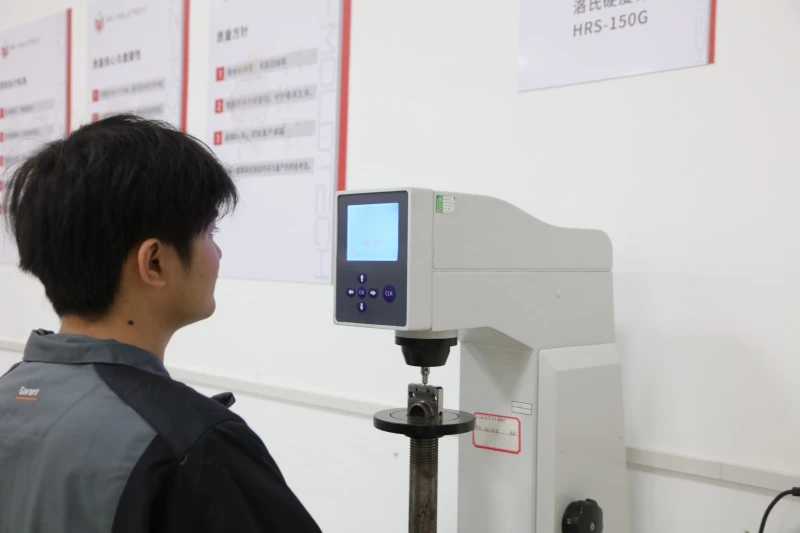
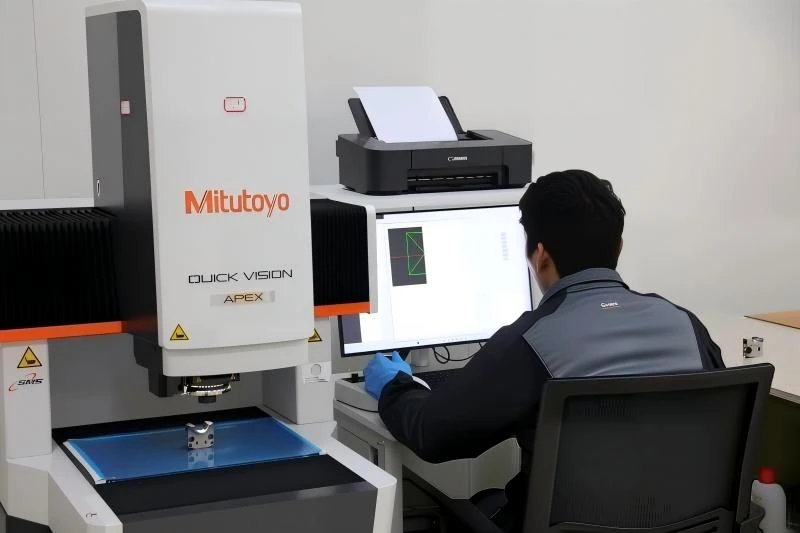
| Precision inspection | CMM, 2D vision measurement systems, height gauges and mechanical testing equipment |
| Component fitting tolerance | ≤0.005 mm for specified mechanical interfaces |
| Mould shoe geometric tolerance | ≤0.01 mm for specified components |
These figures describe the company's published capabilities; applicable tolerances depend on the component and agreed technical specification.
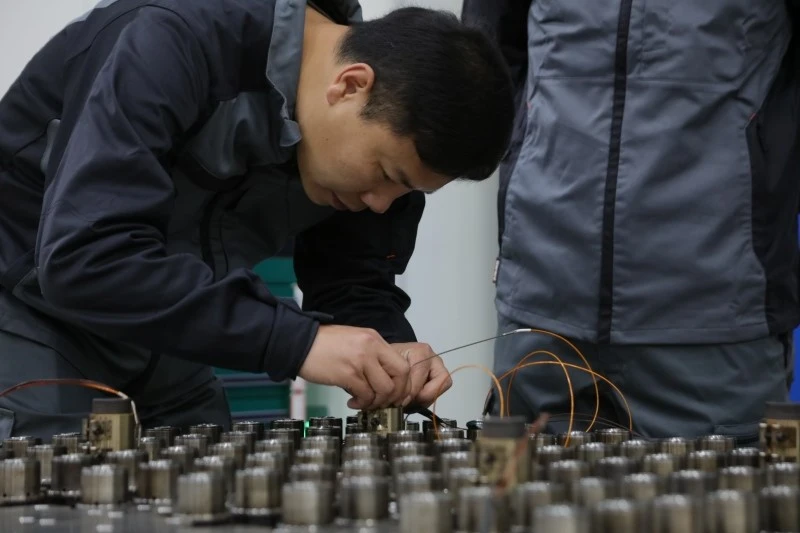
For high-cavity PET preform mould manufacturing, precision cannot be achieved through machining alone. Material selection, process planning, assembly accuracy and inspection must work together. SZ-MOLDTECH uses high-grade steels from established suppliers and collaborates with Oerlikon Balzers on surface treatment solutions for relevant mould components.
The company also applies precision inspection procedures to help control dimensional accuracy and component consistency throughout manufacturing. This provides buyers with a clearer technical basis for evaluating tooling quality before commissioning.
High-Cavity Mould Solutions for Different Production Requirements
SZ-MOLDTECH offers PET preform mould configurations including 48-cavity, 72-cavity, 96-cavity, 128-cavity and 144-cavity options. The appropriate configuration depends on required output, preform design, machine capacity and the production economics of the project.
Its mould solutions are designed for compatibility with selected injection moulding systems, including HUSKY, NETSTAL, SACMI, SIPA and KRAUSS MAFFEI, subject to engineering confirmation of the machine model and interface specifications.
Beyond new mould manufacturing, the company provides mould refurbishment and conversion services. Refurbishment addresses wear and performance degradation in existing tooling, while conversion can adapt a mould to revised preform specifications or changing production requirements. The company also supplies components and assemblies such as cores, cavities, neck rings, hot runner systems and cold half or hot half tooling, according to project scope.
This range of services allows customers to evaluate whether a new mould, a targeted conversion or a refurbishment project offers the most practical route to their production objectives.
Engineering Support from Project Review to Delivery
SZ-MOLDTECH's project process begins with an assessment of production requirements, followed by technical evaluation, design confirmation, manufacturing, inspection and delivery. This approach helps clarify the scope of supply and acceptance criteria before production begins.
To support an accurate quotation, buyers should prepare the preform drawing, target output, required cavity count, neck finish specification and injection moulding machine model. Existing mould drawings, samples and information about recurring production defects are also useful when a project involves tooling replacement or refurbishment.
By combining engineering review with precision manufacturing and quality inspection, SZ-MOLDTECH aims to help PET packaging manufacturers improve production consistency, control tooling costs and maintain reliable operation over the service life of their moulds.
For companies experiencing repeated flash, eccentricity, cooling or cavity-filling problems, reviewing the mould design and component condition with an experienced PET preform mould manufacturer can be a practical step towards a lasting solution.
Frequently Asked Questions About PET Preform Moulds
Compare samples from different cavities and review the defect pattern. A problem isolated to one cavity may indicate localised tooling wear, alignment or flow issues. Defects appearing across most cavities may require investigation of resin preparation, machine settings, hot runner conditions or the overall mould setup. Dimensional measurements and controlled production trials provide stronger evidence than visual inspection alone.
The decision should be based on required hourly output, preform weight, cycle time, machine capacity, available investment and anticipated production demand. A higher cavity count can improve output per cycle, but only when the injection system, cooling capacity and automation can support it. SZ-MOLDTECH can assess these factors when reviewing a new mould project.
Potentially, but compatibility must be verified before purchase. The machine model, mould dimensions, cavity layout, hot runner interface, injection capacity and other relevant specifications must match. A mould should not be considered compatible solely because both machines process PET preforms.
Refurbishment may be suitable when the main mould structure remains serviceable and the performance problems can be corrected through component repair, replacement or precision adjustment. Replacement may be more appropriate when the design no longer meets production requirements, major structural damage exists or the required conversion is uneconomical. A technical inspection is recommended before making the decision.
Provide the preform drawing or physical sample, preform weight, neck finish standard, cavity count, target production output and injection moulding machine model. It is also helpful to specify the intended application, preferred hot runner configuration, required delivery scope and any existing quality problems. Complete technical information enables the supplier to assess feasibility and prepare a more accurate proposal.
SZ-MOLDTECH combines mould engineering, precision machining, component inspection and project-specific technical evaluation. Its services cover new PET preform moulds, mould refurbishment, mould conversion and related tooling components. By reviewing the customer's production requirements and equipment configuration before finalising the solution, the company helps identify relevant tooling considerations and establish clearer technical acceptance criteria.
Conclusion
Reliable PET preform production depends on more than injection pressure or temperature settings. Flash, incomplete filling, haze, eccentricity and neck finish defects can result from different combinations of tooling condition, material preparation and process control. A structured troubleshooting process helps manufacturers identify the real cause and avoid unnecessary adjustments.
For long-term production stability, buyers should prioritise hot runner balance, cooling design, component precision, machine compatibility and a practical maintenance strategy when selecting a PET preform mould.
SZ-MOLDTECH (Jiaxing) Co., Ltd. provides PET preform mould manufacturing, refurbishment, conversion and component solutions for customers with different production requirements. By matching mould engineering to the actual machine, preform specification and target output, manufacturers can make more informed tooling decisions and build a stronger foundation for consistent, efficient PET packaging production.


