


In high-volume PET packaging manufacturing, production efficiency depends not only on injection machine performance but also on the precision, cavity configuration and long-term stability of the preform mould.
As demand for bottled water, carbonated drinks, edible oils and other PET packaging continues to grow, manufacturers are under increasing pressure to improve production capacity while maintaining consistent preform quality and controlling operating costs. A multi-cavity PET preform mould provides an effective solution by producing multiple preforms in a single injection cycle, increasing output without requiring a proportional increase in production equipment or floor space.
However, selecting a high-cavity mould involves more than simply increasing the number of cavities. Melt distribution, cooling efficiency, dimensional accuracy, machine compatibility and mould maintenance all influence the actual production performance.
For manufacturers planning capacity expansion or upgrading existing injection moulding systems, understanding how multi-cavity PET preform moulds support high-volume production is essential for making a practical investment decision.
How Multi-Cavity PET Preform Moulds Increase Production Capacity
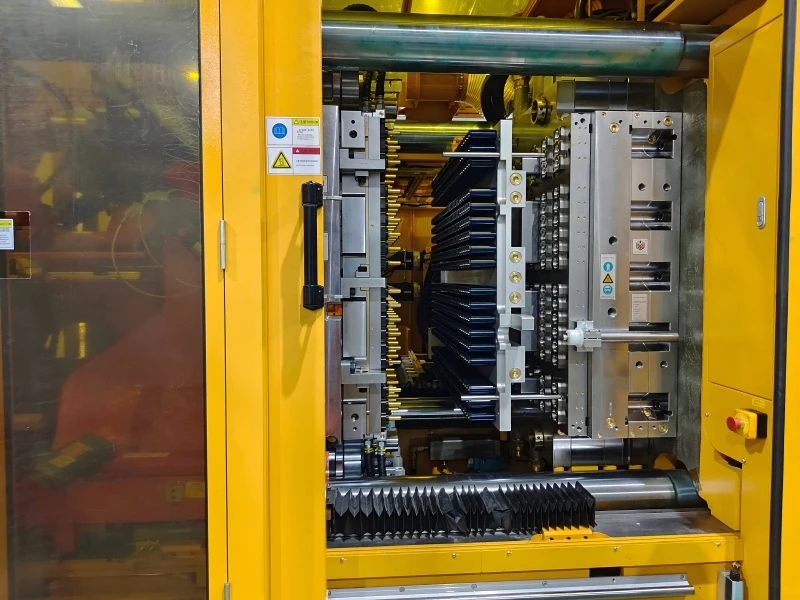
A multi-cavity PET preform mould is designed to manufacture several preforms simultaneously during one injection cycle. Compared with a single-cavity or lower-cavity mould, this configuration allows production facilities to increase hourly output while maintaining a similar moulding cycle.
The production capacity of a mould is primarily determined by cavity number and cycle time. When the injection system, hot runner and cooling circuits are properly configured, increasing cavity count can significantly improve production efficiency.
Production Output Comparison by Cavity Number
| Mould Configuration | Typical Layout | Estimated Output per Hour | Production Application |
|---|---|---|---|
| 48 Cavity PET Preform Mould | 4 × 12 | 16,000–17,500 | Regional beverage manufacturers |
| 72 Cavity PET Preform Mould | 6 × 12 | 26,000–28,000 | Bottled water and beverage production |
| 96 Cavity PET Preform Mould | 8 × 12 | 32,000–34,000 | Large-scale packaging facilities |
| 128 Cavity PET Preform Mould | 8 × 16 | 40,000–42,000 | High-volume beverage production |
| 144 Cavity PET Preform Mould | 8 × 18 | 46,000–48,000 | Large bottling plants |
The figures above represent indicative production ranges from project configurations. Actual output depends on preform weight, cycle time, injection machine capacity, cooling performance and operating conditions.
For production facilities handling large orders, a 96-cavity, 128-cavity or 144-cavity PET preform mould can significantly reduce the number of moulding cycles required to fulfil production targets.
Higher cavity counts are particularly beneficial when the same preform specification is manufactured continuously. By producing more preforms per shot, manufacturers can improve machine utilisation and reduce the production cost allocated to each individual preform.


Improve Production Efficiency Without Expanding Equipment
Increasing production capacity through a multi-cavity PET preform mould can help manufacturers avoid unnecessary investment in additional injection moulding machines.
For example, a beverage packaging manufacturer experiencing increased demand may consider purchasing another injection system. However, if the existing machine has sufficient injection capacity, clamping force and cooling capability, upgrading to a higher-cavity mould may offer an alternative way to increase output.
This approach can help reduce:
Additional machine investment
Factory floor space requirements
Equipment installation costs
Energy consumption associated with additional production lines
Labour requirements for managing multiple machines
The actual economic benefit depends on the existing equipment and production conditions. A high-cavity mould should therefore be selected based on the injection machine's technical capability rather than cavity number alone.
Production Planning Considerations
| Production Factor | Impact on Efficiency |
|---|---|
| Cavity Number | Determines the number of preforms produced per injection cycle |
| Cycle Time | Influences the number of moulding cycles completed per hour |
| Injection Capacity | Determines whether the machine can fill all cavities consistently |
| Cooling Performance | Affects cycle time and preform dimensional stability |
| Automation | Reduces manual handling and supports continuous operation |
A properly matched PET preform mould and injection system can help manufacturers achieve higher output without compromising the stability of the production process.
Balanced Hot Runner Design for Consistent Filling
In a high-cavity PET preform mould, molten PET must be distributed evenly to every cavity. Any variation in melt flow, temperature or pressure can affect preform weight, wall thickness and dimensional consistency.
A balanced hot runner system is therefore one of the most important design considerations for high-volume production.
The hot runner system should maintain uniform melt distribution across all cavities, reducing differences in filling conditions and helping ensure consistent preform quality.
Key engineering considerations include:
Balanced runner layout to minimise differences in melt flow between cavities
Stable temperature control across the hot runner system
Accurate nozzle positioning and gate design
Appropriate pressure distribution during injection
Consistent filling and packing conditions
For manufacturers producing lightweight preforms at high speed, even minor variations can influence subsequent bottle blowing performance. A professionally designed multi-cavity PET preform mould helps maintain consistency in preform weight, neck dimensions and overall geometry.
Optimised Cooling Channels Reduce Cycle Time
Cooling performance directly affects the production cycle of PET preforms. During injection moulding, the PET material must cool sufficiently to achieve the required dimensional stability before the preform is released from the mould.
In high-cavity moulds, cooling requirements become more complex because a large number of cavities must reach suitable temperatures simultaneously.
An optimised cooling circuit helps improve heat dissipation and maintain more uniform mould temperatures throughout the production process.
Cooling Design and Production Benefits
| Cooling Design Feature | Production Benefit |
|---|---|
| Uniform cooling channel arrangement | Reduces temperature differences between cavities |
| Efficient heat transfer | Supports shorter moulding cycles |
| Independent cooling control where required | Helps optimise process conditions |
| Proper water flow distribution | Maintains stable production temperatures |
| Precision cooling structure | Reduces dimensional variation and deformation |
Effective cooling design is particularly important for 128-cavity and 144-cavity PET preform moulds. Without adequate cooling efficiency, increasing cavity number may result in longer cycles, uneven preform quality or reduced production stability.
The objective is not simply to shorten cooling time but to achieve a repeatable process in which all cavities produce preforms with consistent dimensions and appearance.
Precision Machining Ensures Cavity-to-Cavity Consistency
High-volume PET preform production requires consistent quality across every cavity. Differences in cavity dimensions, core alignment, neck ring positioning or surface finish may result in variations between preforms produced during the same injection cycle.
Precision machining and accurate mould assembly are essential for maintaining uniformity.
Critical mould components include:
Cavity inserts
Core inserts
Neck rings
Hot runner components
Mould base and positioning structures
The machining accuracy of these components directly influences preform dimensions, neck finish quality, wall thickness distribution and mould operating stability.
For interchangeable mould components, precision fitting is particularly important. Accurate machining allows components to maintain consistent positioning and supports easier replacement during maintenance.
Precision Manufacturing Standards
| Manufacturing Item | SZ-MOLDTECH Capability |
|---|---|
| Mechanical fitting tolerance | Up to ≤0.005 mm for specified components |
| Mould shoe geometric tolerance | Up to ≤0.01 mm |
| Critical dimensional capability | CmK ≥1.33 |
| Key dimensional capability | Over 80% of key dimensions reach CmK ≥1.67 |
| Manufacturing Process | Precision CNC machining, grinding and inspection |
These specifications are subject to individual project requirements and technical confirmation.
Precision manufacturing helps minimise cavity-to-cavity variation, supporting reliable production of PET preforms for high-speed downstream bottle blowing operations.
Choose the Right Cavity Configuration for Your Production Line
A higher cavity number does not automatically mean a better mould. The appropriate configuration should be determined by production demand, preform design, injection machine specifications and the expected return on investment.
For example, a 48-cavity PET preform mould may be suitable for a regional beverage producer with moderate production demand, while a 128-cavity or 144-cavity configuration may be more appropriate for large bottling facilities requiring continuous high-volume output.
Multi-Cavity PET Preform Mould Selection
| Cavity Number | Typical Preform Application | Recommended Production Scale |
|---|---|---|
| 48 Cavities | Bottled water, beverage packaging | Medium-scale production |
| 72 Cavities | Mineral water and soft drinks | Growing production facilities |
| 96 Cavities | Beverage and food packaging | Large-scale manufacturing |
| 128 Cavities | High-volume beverage packaging | Industrial production lines |
| 144 Cavities | Large-volume bottled water and beverages | High-capacity bottling plants |
The mould layout also needs to accommodate the preform neck finish, body diameter, thread specification and support ring dimensions.
Different cavity configurations may use different pitch layouts, depending on the preform design and injection system. Before purchasing a high-cavity PET preform mould, buyers should confirm that the mould layout is compatible with their machine's platen, injection capacity, hot runner configuration and take-out system.
How SZ-MOLDTECH Supports High-Volume PET Preform Production
SZ-MOLDTECH (Jiaxing) Co., Ltd. is a professional PET preform mould manufacturer specialising in precision mould design, manufacturing, refurbishment and conversion solutions.
Integrating technical research and development, manufacturing, quality inspection and independent sales, SZ-MOLDTECH provides PET preform mould solutions for bottled water, beverages, edible oils, food packaging and other PET packaging applications.
With more than 22 years of experience in the PET preform mould industry, a 6,000 m² manufacturing facility and a professional team of 76 employees, the company has established production capabilities for high-cavity mould projects requiring precision machining, stable moulding performance and long-term operational reliability.
Its product portfolio covers 48-cavity, 72-cavity, 96-cavity, 128-cavity and 144-cavity PET preform moulds, with customised layouts and technical configurations available according to customer production requirements.
Manufacturing and Engineering Capabilities
| Capability | Details |
|---|---|
| Industry Experience | More than 22 years in PET preform mould manufacturing |
| Manufacturing Facility | 6,000 m² |
| Professional Team | 76 employees |
| Annual Production Capacity | Approximately 3,300 cavities |
| Mould Configurations | 48, 72, 96, 128 and 144 cavities |
| Main Services | New mould manufacturing, refurbishment and conversion |
| Export Markets | Thailand, Japan, Uganda, Türkiye, Oman and other markets |
Precision Machining and Material Selection
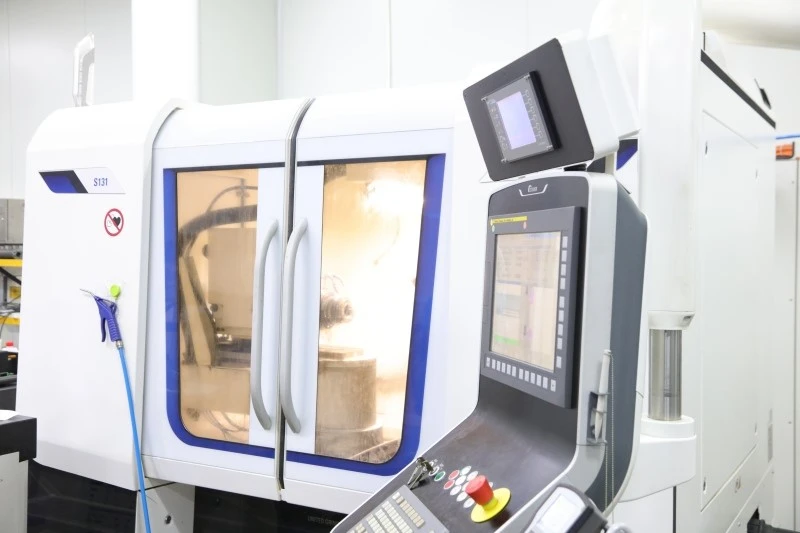
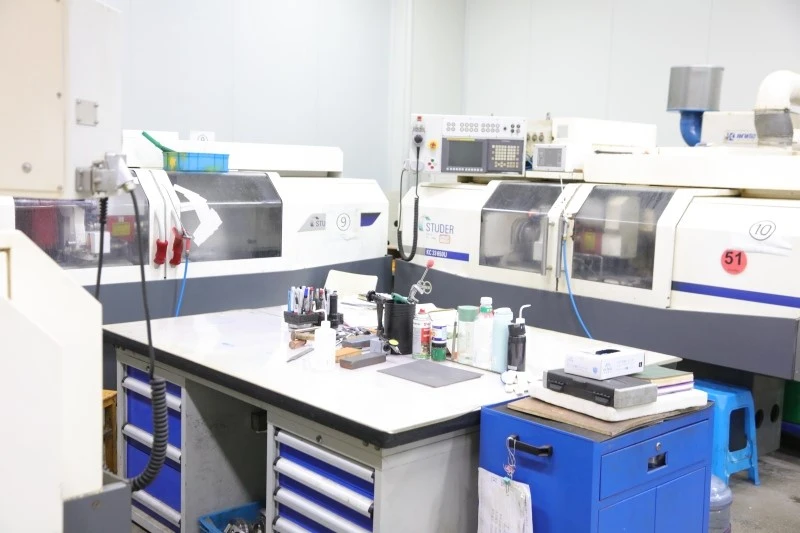
SZ-MOLDTECH continuously upgrades its manufacturing facilities with advanced CNC machining and precision inspection equipment to meet the requirements of high-speed, multi-cavity PET preform mould production.
The company works with recognised mould steel suppliers, including UDDEHOLM, Bosch Gotthards Huette and Schmiede Werke Gröditz GmbH, according to project specifications.
Precision grinding and machining processes are applied to critical mould components to improve dimensional accuracy, surface finish and component interchangeability.
Through strategic cooperation with Oerlikon Balzers, SZ-MOLDTECH also provides advanced coating solutions for selected mould components, helping improve wear resistance, corrosion resistance and demoulding performance.
Engineering Design and Quality Control
Each PET preform mould project is evaluated according to the customer's preform design, production target, injection machine specifications and operating conditions.
The engineering process focuses on:
Mould structure and cavity layout
Balanced hot runner system design
Cooling circuit optimisation
Core, cavity and neck ring precision
Mould assembly and component fitting
Trial moulding and quality verification
The company applies precision manufacturing standards and quality inspection procedures throughout the production process to support dimensional accuracy and stable mould performance.
Compatibility and Customisation
SZ-MOLDTECH manufactures PET preform moulds compatible with various injection moulding systems, including HUSKY, NETSTAL, HUAYAN, UNIQUE and other platforms, subject to project engineering confirmation.
Customers can specify cavity number, preform weight, bottle neck finish, mould pitch, hot runner configuration and other technical requirements.
In addition to new mould manufacturing, SZ-MOLDTECH provides mould refurbishment and conversion services, including cold half, hot half, core, cavity, neck ring and related mould components.
These services allow packaging manufacturers to upgrade existing production systems, restore mould performance or adapt tooling to new bottle designs without necessarily replacing the complete mould.

Conclusion
Multi-cavity PET preform moulds provide an effective solution for manufacturers seeking to increase production capacity, improve moulding efficiency and reduce the cost per preform. By producing multiple preforms in each injection cycle, high-cavity mould configurations help beverage and packaging manufacturers meet growing demand without proportionally increasing equipment investment.
However, high-volume production depends on more than cavity number. Balanced hot runner systems, optimised cooling circuits, precision machining, accurate mould assembly and machine compatibility all contribute to stable output and consistent preform quality.
As an experienced PET preform mould manufacturer, SZ-MOLDTECH (Jiaxing) Co., Ltd. provides high-cavity PET preform mould solutions, precision manufacturing, refurbishment and conversion services for different production requirements. Through engineering-focused design and manufacturing capabilities, the company supports customers in improving production efficiency and maintaining reliable long-term mould performance.
For manufacturers planning a new production line or upgrading existing PET preform moulding equipment, selecting the right mould configuration and engineering partner is an important step towards achieving sustainable high-volume production.
Frequently Asked Questions About Multi-Cavity PET Preform Moulds
A 96-cavity mould produces 96 preforms per injection cycle, while a 144-cavity mould produces 144 preforms per cycle. The 144-cavity configuration offers higher theoretical output, but it also requires greater injection capacity, suitable clamping force, efficient cooling and balanced melt distribution. The best option depends on the production target and machine specifications.
Hourly production depends on cavity number and moulding cycle time. A 48-cavity mould may produce approximately 16,000–17,500 preforms per hour, while a 144-cavity mould may reach approximately 46,000–48,000 preforms per hour under suitable production conditions. Actual output should be confirmed according to the preform design and injection machine configuration.
Buyers should evaluate the machine's injection capacity, clamping force, mould mounting dimensions, cycle time, hot runner compatibility and cooling capacity. The required hourly output and preform weight should also be considered. A mould supplier can assess these specifications to recommend a suitable cavity configuration and pitch layout.
A mould is generally designed for a specific preform specification, including weight, neck finish, body dimensions and material requirements. Different preform designs usually require corresponding mould components or a customised mould structure. Buyers should provide drawings or samples to confirm the required configuration before manufacturing.
Mould service life depends on steel quality, machining precision, surface treatment, operating conditions, maintenance frequency, cooling water quality and production parameters. Proper preventive maintenance, timely replacement of worn components and regular inspection of the hot runner and cooling systems help maintain mould performance over extended production periods.
Yes. SZ-MOLDTECH provides PET preform mould refurbishment and conversion services, including hot half, cold half, core, cavity, neck ring and related mould components. These services can help customers restore moulding performance, upgrade existing tooling or adapt moulds to new production requirements. Technical evaluation is recommended before confirming the refurbishment scope.


