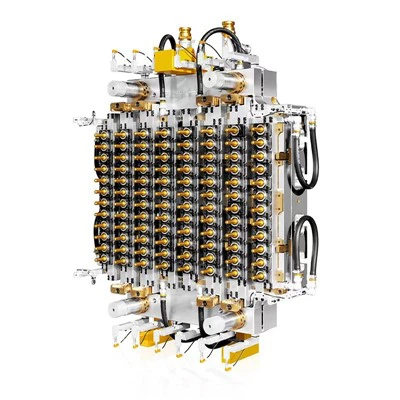


As a supplier of 29/25 PET Preform Molds, I've witnessed firsthand the critical role that mold inserts play in the manufacturing process. In this blog, I'll delve into the significance of mold inserts in a 29/25 PET Preform Mold, exploring their functions, benefits, and how they contribute to the overall quality and efficiency of preform production.
Understanding the Basics of 29/25 PET Preform Molds
Before we discuss the role of mold inserts, let's briefly understand what a 29/25 PET Preform Mold is. PET (Polyethylene Terephthalate) is a widely used thermoplastic polymer, commonly used in the production of beverage bottles, food containers, and other packaging products. A 29/25 PET Preform Mold is designed to produce preforms with a specific neck finish size of 29mm and a body diameter of 25mm. These preforms are then blown into the final bottle shape.
The Role of Mold Inserts in 29/25 PET Preform Molds
Mold inserts are removable components within the mold that are crucial for the production of high - quality preforms. Here are some of the key roles they play:
1. Precision and Customization
Mold inserts allow for a high degree of precision in the preform manufacturing process. They are machined to exact specifications, ensuring that each preform produced has consistent dimensions and wall thickness. This precision is essential for the subsequent blow - molding process, as it ensures that the final bottles have the correct shape and size.
Moreover, mold inserts can be customized to meet specific customer requirements. For example, if a customer needs a preform with a unique design or a special feature, the mold insert can be modified accordingly. This flexibility makes it possible to produce a wide variety of preforms, catering to different market needs.
2. Heat Transfer
Efficient heat transfer is vital in the PET preform molding process. Mold inserts are designed to facilitate the transfer of heat from the molten PET material to the cooling channels within the mold. This helps in solidifying the preform quickly and evenly, reducing cycle times and improving production efficiency.
The material used for the mold inserts also plays a crucial role in heat transfer. High - thermal - conductivity materials, such as copper alloys, are often used to enhance heat dissipation. This not only speeds up the cooling process but also helps in preventing warping and other defects in the preforms.
3. Wear Resistance
The molding process involves high pressure and temperature, which can cause wear and tear on the mold components. Mold inserts are made from materials with high wear resistance, such as hardened steel or carbide. This ensures that they can withstand the harsh conditions of the molding process and maintain their shape and dimensions over a long period of time.
By using wear - resistant mold inserts, the overall lifespan of the mold is extended, reducing the need for frequent mold replacements. This, in turn, lowers the production costs and improves the profitability of the manufacturing operation.
4. Ease of Maintenance and Replacement
Mold inserts are designed to be easily removable and replaceable. This makes maintenance and repair of the mold much easier. If a mold insert becomes damaged or worn out, it can be quickly replaced without having to replace the entire mold. This reduces downtime and ensures that production can resume as soon as possible.


Benefits of Using Mold Inserts in 29/25 PET Preform Molds
The use of mold inserts in 29/25 PET Preform Molds offers several benefits:
1. Improved Product Quality
As mentioned earlier, mold inserts ensure precision and consistency in preform production. This results in high - quality preforms with uniform wall thickness, smooth surfaces, and accurate dimensions. High - quality preforms are essential for producing high - quality bottles, which are more likely to meet customer expectations and industry standards.
2. Increased Production Efficiency
The efficient heat transfer and wear - resistant properties of mold inserts contribute to faster cycle times and reduced production costs. By minimizing the time required for cooling and reducing the frequency of mold replacements, production efficiency is significantly improved. This allows manufacturers to produce more preforms in less time, increasing their overall output.
3. Cost Savings
While the initial investment in mold inserts may be relatively high, the long - term cost savings are significant. The extended lifespan of the mold, reduced maintenance costs, and increased production efficiency all contribute to lower production costs per unit. This makes the use of mold inserts a cost - effective solution for PET preform manufacturing.
Related Products and Their Applications
In addition to 29/25 PET Preform Molds, we also offer a range of other PET preform molds, such as the 500ml PET Preform Mould, Transparent PET Preform Mold, and 30/25 PET Preform Mold for Water Bottle. These molds are designed to meet different production requirements and can be customized to suit specific customer needs.
Conclusion
In conclusion, mold inserts play a crucial role in the 29/25 PET Preform Mold manufacturing process. They ensure precision, efficient heat transfer, wear resistance, and ease of maintenance, all of which contribute to the production of high - quality preforms. The benefits of using mold inserts, such as improved product quality, increased production efficiency, and cost savings, make them an essential component of any PET preform manufacturing operation.
If you are in the market for high - quality 29/25 PET Preform Molds or any other PET preform molds, we invite you to contact us for a detailed discussion. Our team of experts is ready to assist you in finding the best solution for your production needs.
References
- "PET Preform Molding Technology" by John Doe, published in the Journal of Plastics Manufacturing.
- "Advanced Mold Design for PET Preforms" by Jane Smith, presented at the International Conference on Plastics Processing.