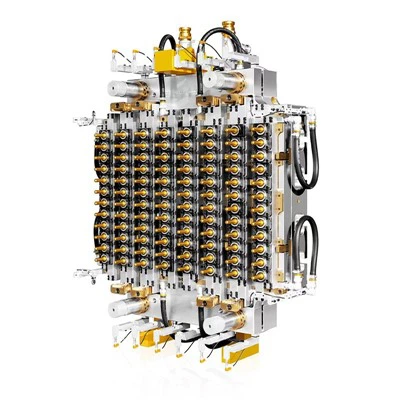


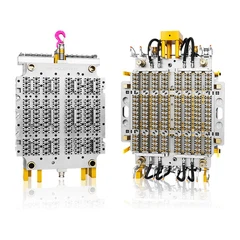


In the manufacturing of oil preform moulds, the cooling system plays a crucial role. As a leading supplier of Oil Preform Moulds, I am here to share in - depth knowledge about the cooling system of an oil preform mould.
The Importance of the Cooling System in Oil Preform Moulds
The cooling system is the heart of an oil preform mould. In the process of producing oil preforms, molten plastic is injected into the mould cavity. If the cooling is not efficient, it can lead to a series of problems. Firstly, slow cooling can cause the preforms to deform. The plastic needs to solidify in a proper and uniform way. If the cooling rate is uneven, different parts of the preform will shrink at different rates, resulting in warping and dimensional inaccuracies.
Secondly, an inefficient cooling system can significantly reduce the production cycle. Longer cooling times mean fewer preforms can be produced within a given time frame, which directly affects the productivity and profitability of the manufacturing process. For example, in a high - volume production environment, even a few seconds of extra cooling time per preform can add up to a large amount of lost production over the course of a day.
Components of the Cooling System
The cooling system of an oil preform mould typically consists of several key components.
Cooling Channels
Cooling channels are the most fundamental part of the cooling system. These channels are drilled or machined within the mould. They are designed to carry a cooling medium, usually water, around the mould cavity. The layout and design of the cooling channels are critical. They need to be evenly distributed around the cavity to ensure uniform cooling. For instance, in a multi - cavity oil preform mould, each cavity should have its own set of well - designed cooling channels to guarantee that all preforms cool at the same rate.
The diameter of the cooling channels also matters. A larger diameter can allow for a higher flow rate of the cooling medium, but it may also require more space within the mould. On the other hand, a smaller diameter may restrict the flow, leading to inefficient cooling. Engineers need to find the right balance based on the size and shape of the mould, as well as the type of plastic being used.
Cooling Medium
As mentioned earlier, water is the most commonly used cooling medium in oil preform moulds. Water has excellent heat - transfer properties. It can absorb a large amount of heat from the mould and carry it away efficiently. However, in some cases, other cooling media such as glycol - water mixtures may be used. Glycol - water mixtures have a lower freezing point than pure water, which can be beneficial in cold environments or when the cooling system needs to operate at lower temperatures.
The temperature of the cooling medium is also an important factor. If the water is too cold, it can cause the plastic to solidify too quickly, leading to internal stresses in the preform. On the other hand, if the water is too warm, it will not be able to cool the mould effectively. Therefore, a temperature control system is often used to maintain the cooling medium at an optimal temperature.
Pumps and Valves
Pumps are used to circulate the cooling medium through the cooling channels. They ensure a continuous and consistent flow of the cooling medium. The pump needs to be sized correctly to provide the appropriate flow rate for the specific mould. A valve system is also essential. Valves can be used to control the flow of the cooling medium, allowing for adjustments based on the cooling requirements of different parts of the mould. For example, in a complex mould with different thicknesses in various areas, the valves can be adjusted to provide more cooling to the thicker parts.
Design Considerations for the Cooling System
When designing the cooling system for an oil preform mould, several factors need to be taken into account.
Mould Geometry
The shape and size of the oil preform mould have a significant impact on the cooling system design. For example, if the mould has a complex shape with deep cavities or thin walls, the cooling channels need to be carefully designed to reach all areas of the mould. In some cases, conformal cooling channels may be used. Conformal cooling channels follow the shape of the mould cavity, providing more uniform cooling compared to traditional straight - drilled channels.
Plastic Material
Different plastic materials have different thermal properties. Some plastics have a higher heat capacity and require more cooling to solidify. For example, polypropylene used in oil preforms has different cooling requirements compared to polyethylene terephthalate (PET). The cooling system needs to be designed to accommodate the specific thermal characteristics of the plastic being used.


Production Volume
The production volume also affects the cooling system design. In high - volume production, the cooling system needs to be highly efficient to minimize the production cycle time. This may require larger pumps, more cooling channels, and better temperature control. In low - volume production, a simpler cooling system may be sufficient.
Our Company's Expertise in Cooling System Design
As an Oil Preform Mould supplier, we have extensive experience in designing and optimizing cooling systems for oil preform moulds. Our team of engineers uses advanced simulation software to analyze the heat transfer process within the mould. This allows us to design cooling channels that provide the most efficient and uniform cooling.
We also offer a range of PET Preform Mould for Oil Bottles with state - of - the - art cooling systems. Our Edible Oil Preform Mold is designed to meet the highest standards of quality and performance. And our 96 Cavities PET Preform Mold is suitable for high - volume production, with a cooling system that ensures fast and uniform cooling of all 96 cavities.
Conclusion
The cooling system of an oil preform mould is a complex and critical part of the manufacturing process. A well - designed cooling system can improve the quality of the preforms, increase production efficiency, and reduce costs. As a professional Oil Preform Mould supplier, we are committed to providing our customers with the best - in - class cooling systems and moulds. If you are interested in our products or have any questions about the cooling system of oil preform moulds, please feel free to contact us for procurement and further discussions.
References
- "Mould Cooling Design Handbook" by XYZ Publishing
- "Plastic Mould Manufacturing Technology" by ABC Press