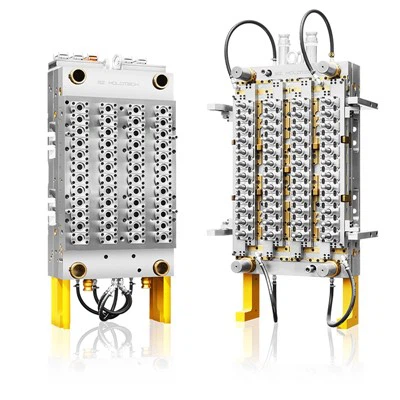




As a supplier of PET Preform Cold Half Molds, I've witnessed firsthand the challenges that manufacturers face when using these molds. In this blog post, I'll discuss some of the common problems with PET Preform Cold Half Molds and provide practical solutions to help you overcome them.
1. Surface Defects
One of the most common issues with PET preform cold half molds is surface defects on the preforms. These defects can include scratches, pits, and uneven surfaces, which can affect the appearance and quality of the final product.
Causes
- Wear and Tear: Over time, the mold surface can wear down due to repeated use, especially if the mold is not properly maintained.
- Contamination: Dirt, dust, or other contaminants can get stuck on the mold surface, causing defects on the preforms.
- Improper Cooling: If the cooling system is not working properly, it can lead to uneven cooling of the preforms, resulting in surface defects.
Solutions


- Regular Maintenance: Schedule regular maintenance for your molds, including cleaning, polishing, and inspection. This will help to prevent wear and tear and keep the mold surface in good condition.
- Clean Environment: Keep the molding area clean and free of contaminants. Use air filters and clean the mold regularly to prevent dirt and dust from accumulating on the surface.
- Optimize Cooling System: Ensure that the cooling system is working properly and that the coolant is flowing evenly through the mold. This will help to prevent uneven cooling and reduce the risk of surface defects.
2. Gate Marks
Gate marks are another common problem with PET preform cold half molds. These marks are left on the preforms at the point where the molten plastic enters the mold cavity.
Causes
- Gate Design: The design of the gate can affect the appearance of the gate marks. If the gate is too large or too small, it can cause uneven flow of the molten plastic, resulting in gate marks.
- Injection Pressure: High injection pressure can cause the molten plastic to flow too quickly through the gate, resulting in gate marks.
- Mold Temperature: If the mold temperature is too high or too low, it can affect the flow of the molten plastic and cause gate marks.
Solutions
- Optimize Gate Design: Work with your mold designer to optimize the gate design for your specific application. This may involve adjusting the size, shape, and location of the gate to ensure even flow of the molten plastic.
- Adjust Injection Pressure: Reduce the injection pressure to a level that allows the molten plastic to flow smoothly through the gate without causing gate marks.
- Control Mold Temperature: Maintain the mold temperature within the recommended range to ensure proper flow of the molten plastic and reduce the risk of gate marks.
3. Warping
Warping is a common problem with PET preforms, especially when the preforms are not cooled evenly. Warping can cause the preforms to become distorted, which can affect the fit and function of the final product.
Causes
- Uneven Cooling: If the cooling system is not working properly, it can lead to uneven cooling of the preforms, resulting in warping.
- Injection Molding Process: The injection molding process can also affect the warping of the preforms. If the injection pressure, temperature, or cycle time is not optimized, it can cause the preforms to warp.
- Material Properties: The properties of the PET material can also affect the warping of the preforms. If the material has a high shrinkage rate, it is more likely to warp during the cooling process.
Solutions
- Optimize Cooling System: Ensure that the cooling system is working properly and that the coolant is flowing evenly through the mold. This will help to prevent uneven cooling and reduce the risk of warping.
- Adjust Injection Molding Process: Optimize the injection pressure, temperature, and cycle time to ensure that the preforms are molded properly and do not warp.
- Choose the Right Material: Select a PET material with a low shrinkage rate to reduce the risk of warping.
4. Flash
Flash is a common problem with PET preform cold half molds. Flash is the excess plastic that is left on the preforms after the molding process.
Causes
- Mold Clearance: If the mold clearance is too large, it can allow the molten plastic to escape from the mold cavity, resulting in flash.
- Injection Pressure: High injection pressure can cause the molten plastic to flow out of the mold cavity, resulting in flash.
- Mold Wear: Over time, the mold can wear down, causing the mold clearance to increase and resulting in flash.
Solutions
- Adjust Mold Clearance: Work with your mold designer to adjust the mold clearance to ensure that it is within the recommended range. This will help to prevent the molten plastic from escaping from the mold cavity and reduce the risk of flash.
- Reduce Injection Pressure: Reduce the injection pressure to a level that allows the molten plastic to flow smoothly into the mold cavity without causing flash.
- Regular Maintenance: Schedule regular maintenance for your molds, including cleaning, polishing, and inspection. This will help to prevent mold wear and keep the mold clearance within the recommended range.
5. Ejection Problems
Ejection problems are another common issue with PET preform cold half molds. These problems can include difficulty ejecting the preforms from the mold, damage to the preforms during ejection, and uneven ejection of the preforms.
Causes
- Mold Design: The design of the mold can affect the ejection process. If the mold is not designed properly, it can make it difficult to eject the preforms from the mold.
- Ejection System: The ejection system can also affect the ejection process. If the ejection system is not working properly, it can cause the preforms to get stuck in the mold or be damaged during ejection.
- Mold Temperature: If the mold temperature is too high or too low, it can affect the ejection process. If the mold temperature is too high, the preforms may stick to the mold, making it difficult to eject them. If the mold temperature is too low, the preforms may become brittle and break during ejection.
Solutions
- Optimize Mold Design: Work with your mold designer to optimize the mold design for your specific application. This may involve adjusting the shape, size, and location of the ejection pins to ensure that the preforms can be ejected easily from the mold.
- Maintain Ejection System: Regularly maintain the ejection system to ensure that it is working properly. This may involve lubricating the ejection pins, checking the ejection mechanism, and replacing any worn or damaged parts.
- Control Mold Temperature: Maintain the mold temperature within the recommended range to ensure proper ejection of the preforms. This may involve using a temperature control system to regulate the mold temperature.
Conclusion
In conclusion, PET preform cold half molds can experience a variety of problems, including surface defects, gate marks, warping, flash, and ejection problems. By understanding the causes of these problems and implementing the appropriate solutions, you can improve the quality and efficiency of your PET preform production.
If you're interested in learning more about our Wide Neck Bottle Preform Mould, Energy Saving Preform Mold, or PET Bottle Preform Mold, please contact us to discuss your specific requirements. We're here to help you find the best solution for your PET preform production needs.
References
- Injection Molding Handbook, by O. Olsson and K. Menges
- Plastics Processing Technology, by M. P. Stevens
- Polymer Processing: Principles and Design, by R. T. Fenner