



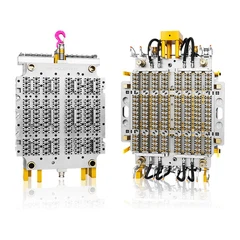


Hey there! As a supplier of Oil Bottle Preform Molds, I often get asked about the injection speed for these molds. So, let's dive right into it and figure out what the ideal injection speed is and why it matters.
First off, what exactly is injection speed? Well, in the world of injection molding, injection speed refers to how fast the molten plastic is pushed into the mold cavity. It's a crucial factor because it can significantly impact the quality of the preform. If the injection speed is too slow, the plastic might start to cool before it fills the entire mold, leading to incomplete parts or visible weld lines. On the other hand, if it's too fast, it can cause excessive pressure, which might result in flash (the excess plastic that seeps out of the mold), or even damage to the mold itself.
Now, for oil bottle preform molds, the injection speed depends on several factors. One of the most important ones is the type of plastic being used. Different plastics have different viscosities, which is a measure of how thick or thin they are. For example, PET (polyethylene terephthalate), which is commonly used for oil bottles, has a relatively low viscosity when it's molten. This means it can flow more easily compared to some other plastics. So, when using PET, we can generally use a higher injection speed.
Another factor is the size and complexity of the preform. If the preform has a lot of intricate details or a large volume, we might need to adjust the injection speed accordingly. A larger preform might require a slower injection speed to ensure that the plastic fills all the nooks and crannies of the mold evenly.
The temperature of the plastic and the mold also plays a role. If the plastic is too cold, it will be more viscous and might require a higher injection speed to push it into the mold. Conversely, if the mold is too hot, the plastic might flow too easily, and we might need to slow down the injection speed to prevent flash.


So, what's the typical injection speed for an oil bottle preform mold? Well, it can vary widely depending on the factors I mentioned above. But as a general rule of thumb, for a standard PET oil bottle preform, the injection speed can range from around 100 to 300 millimeters per second. However, this is just a rough estimate, and the actual speed might need to be adjusted based on the specific requirements of the mold and the plastic.
Let's talk about how to determine the right injection speed for your oil bottle preform mold. The best way is through trial and error. Start with a conservative injection speed and gradually increase it while monitoring the quality of the preforms. Look for signs of incomplete filling, flash, or other defects. If you notice any issues, adjust the speed accordingly.
It's also a good idea to consult with the mold manufacturer or a plastics expert. They can provide valuable insights based on their experience and knowledge of the specific mold and plastic you're using.
Now, if you're in the market for an oil bottle preform mold, we've got you covered. We also offer other types of preform molds, such as PET Water Bottle Preform Mold and Beverage Bottle Preform Mold. And if you're looking for a high - cavity mold, our PET Preform Injection Mould 96cav is a great option.
We pride ourselves on providing high - quality molds that are designed to meet your specific needs. Our team of experts is always ready to help you choose the right mold and optimize the injection process.
If you're interested in purchasing an oil bottle preform mold or any of our other products, don't hesitate to reach out. We're here to assist you with all your preform mold needs. Whether you're a small business just starting out or a large manufacturer looking to upgrade your equipment, we can find the perfect solution for you.
In conclusion, understanding the injection speed for an oil bottle preform mold is essential for producing high - quality preforms. By considering factors like the type of plastic, the size and complexity of the preform, and the temperature of the plastic and the mold, you can determine the ideal injection speed. And if you need a reliable supplier for your preform mold needs, we're here to help.
References:
- Injection Molding Handbook by O. Olajide
- Plastics Processing Technology by R. A. Myers


