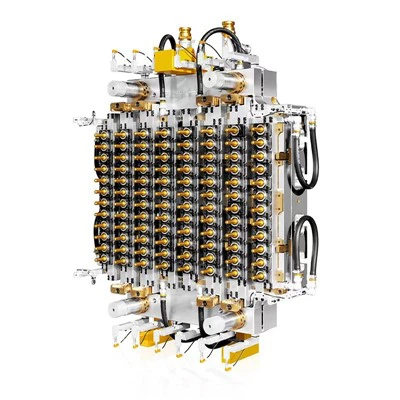


As a leading supplier of Oil Bottle Preform Molds, I understand the critical role that injection parameters play in the production of high-quality oil bottle preforms. Adjusting these parameters correctly can significantly impact the final product's quality, efficiency, and cost-effectiveness. In this blog post, I will share some insights on how to adjust the injection parameters for an oil bottle preform mold.
Understanding the Basics of Injection Molding
Injection molding is a manufacturing process in which molten plastic is injected into a mold cavity to create a specific shape. The process involves several key steps, including plasticizing the raw material, injecting it into the mold, cooling the plastic, and ejecting the finished product. The injection parameters, such as temperature, pressure, speed, and time, need to be carefully controlled to ensure the production of consistent and high-quality preforms.
Key Injection Parameters for Oil Bottle Preform Molds
1. Temperature
Temperature is one of the most critical injection parameters. It affects the viscosity of the plastic, which in turn influences the flowability and filling of the mold cavity. For oil bottle preforms, the temperature of the plasticizing unit and the mold needs to be carefully regulated.
- Plasticizing Unit Temperature: The temperature of the plasticizing unit should be set according to the type of plastic used. For example, PET (Polyethylene Terephthalate), which is commonly used for oil bottle preforms, typically requires a plasticizing temperature in the range of 260 - 280°C. If the temperature is too low, the plastic may not melt properly, leading to incomplete filling of the mold cavity. On the other hand, if the temperature is too high, the plastic may degrade, affecting the mechanical properties of the preform.
- Mold Temperature: The mold temperature also plays a crucial role in the injection process. A lower mold temperature can help in faster cooling of the preform, reducing the cycle time. However, if the mold temperature is too low, it may cause stress in the preform, leading to warping or cracking. For oil bottle preforms, a mold temperature in the range of 10 - 15°C is often recommended.
2. Pressure
Injection pressure is used to force the molten plastic into the mold cavity. The pressure needs to be sufficient to fill the mold completely but not too high to cause excessive stress on the preform or damage the mold.
- Injection Pressure: The injection pressure depends on various factors, such as the size and complexity of the preform, the type of plastic, and the mold design. For oil bottle preforms, the injection pressure typically ranges from 100 - 150 MPa. A higher injection pressure may be required for preforms with thin walls or complex geometries.
- Holding Pressure: After the mold is filled, a holding pressure is applied to compensate for the shrinkage of the plastic as it cools. The holding pressure is usually lower than the injection pressure and is maintained for a specific period. The holding pressure and time need to be optimized to ensure the preform has the correct dimensions and density.
3. Speed
The injection speed determines how quickly the molten plastic is injected into the mold cavity. A faster injection speed can help in filling the mold more quickly, reducing the cycle time. However, if the injection speed is too high, it may cause air traps or turbulence in the plastic, leading to defects in the preform.


- Injection Speed: The injection speed should be adjusted based on the size and shape of the preform. For oil bottle preforms, a moderate injection speed is usually recommended to ensure a smooth filling of the mold cavity. The injection speed can be adjusted during the injection process to optimize the filling pattern.
4. Time
The injection time, cooling time, and cycle time are important parameters that affect the production efficiency and quality of the preforms.
- Injection Time: The injection time is the time required to inject the molten plastic into the mold cavity. It depends on the injection speed and the volume of the preform. A shorter injection time can reduce the cycle time, but it needs to be balanced with the filling quality.
- Cooling Time: The cooling time is the time required for the preform to cool and solidify in the mold. A longer cooling time can ensure a better quality preform with less stress and warping. However, it also increases the cycle time. The cooling time can be optimized by adjusting the mold temperature and the cooling system.
- Cycle Time: The cycle time is the total time required to produce one preform, including the injection time, cooling time, and ejection time. A shorter cycle time can increase the production efficiency and reduce the cost per preform.
Adjusting the Injection Parameters
To adjust the injection parameters for an oil bottle preform mold, the following steps can be followed:
1. Initial Setup
- Start with the recommended injection parameters provided by the plastic resin manufacturer and the mold designer. These parameters are usually based on the type of plastic, the mold design, and the production requirements.
- Set the temperature of the plasticizing unit and the mold according to the recommended values.
- Set the injection pressure, speed, and time based on the size and shape of the preform.
2. Trial Runs
- Conduct trial runs to produce a small batch of preforms. During the trial runs, monitor the quality of the preforms, including the dimensions, appearance, and mechanical properties.
- Check for any defects, such as air traps, flash, or warping. If any defects are found, adjust the injection parameters accordingly.
3. Optimization
- Based on the results of the trial runs, optimize the injection parameters to improve the quality and efficiency of the preform production.
- For example, if the preform has a short shot (incomplete filling), increase the injection pressure or speed. If the preform has warping, adjust the mold temperature or the cooling time.
4. Continuous Monitoring
- Continuously monitor the injection parameters and the quality of the preforms during the production process. Make adjustments as needed to ensure consistent quality.
Importance of Correct Injection Parameters
Correct injection parameters are essential for the production of high-quality oil bottle preforms. Here are some of the benefits of adjusting the injection parameters correctly:
- Quality: By adjusting the injection parameters, you can ensure that the preforms have the correct dimensions, appearance, and mechanical properties. This can improve the overall quality of the oil bottles and enhance the brand image.
- Efficiency: Optimizing the injection parameters can reduce the cycle time, increase the production efficiency, and lower the cost per preform.
- Cost-Effectiveness: Correct injection parameters can minimize the waste of raw materials and reduce the number of defective preforms, leading to cost savings.
Conclusion
Adjusting the injection parameters for an oil bottle preform mold is a complex but crucial process. By understanding the key injection parameters, following the adjustment steps, and continuously monitoring the production process, you can produce high-quality oil bottle preforms efficiently and cost-effectively.
If you are interested in our Oil Preform Mould, Pet Preform Molds for Carbonated Drinks Bottle, or 96 Cavities PET Preform Mold, please feel free to contact us for further discussion and procurement. We are committed to providing you with the best solutions for your preform production needs.
References
- Injection Molding Handbook, by O. Olowinsky
- Plastics Processing Technology, by M. P. Stevens