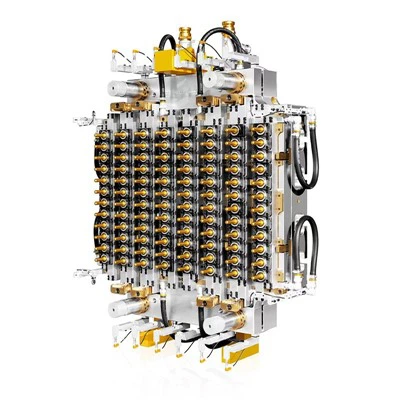


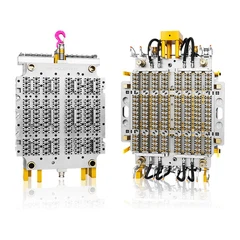


Hey there! I'm a supplier of Pet Beverage Bottle Preform Molds, and today I wanna dig into a super important topic: how the injection pressure affects the quality of a Pet Beverage Bottle Preform in the mold.
First off, let's talk about what injection pressure is. In the process of making Pet Beverage Bottle Preforms, injection pressure is the force that pushes the molten PET material into the mold cavity. It's like the power behind getting the material where it needs to go.
Now, a too - low injection pressure can cause a bunch of problems. One of the most obvious ones is incomplete filling. When the pressure isn't high enough, the molten PET might not reach all parts of the mold cavity. This leads to preforms with thin or missing sections. For example, the neck or the bottom of the preform might not be fully formed. These defective preforms are a no - go for making high - quality beverage bottles. They won't have the right strength and shape, which can affect the overall performance of the final product.
Another issue with low injection pressure is poor surface finish. The preform might end up with a rough or uneven surface. This isn't just a cosmetic problem. A rough surface can affect the clarity of the preform, which is crucial for beverage bottles where consumers want to see the product inside clearly. Also, a poor surface finish can make it harder to print labels on the bottle later on.
On the flip side, too high injection pressure also has its downsides. One major problem is flash. Flash occurs when the molten PET material squeezes out between the mold halves. It creates thin, excess plastic around the edges of the preform. Removing flash is an extra step in the manufacturing process, which adds time and cost. And if the flash isn't removed properly, it can cause issues during the blow - molding process later on.
High injection pressure can also lead to stress marks on the preform. These stress marks are weak points in the preform. When the preform is blown into a bottle, these weak points can cause the bottle to burst or leak. This is a huge problem for beverage manufacturers as it can lead to product recalls and damage to their brand reputation.
So, finding the right injection pressure is like walking a tightrope. It requires a good understanding of the PET material, the design of the mold, and the specific requirements of the beverage bottle.
When it comes to the mold design, different types of molds have different optimal injection pressures. For example, Pet Preform Molds for Carbonated Drinks Bottle need to be able to withstand the pressure from the carbonated liquid inside the bottle. So, the preforms made with these molds need to have a certain strength and density. This often means a slightly higher injection pressure compared to molds for non - carbonated beverages.
PET Preform Mould for Oil Bottles also have their own requirements. Oil bottles need to be resistant to the oil and have a good barrier to prevent leakage. The injection pressure for these molds needs to be adjusted to ensure that the preform has the right thickness and structure to meet these requirements.
Our 96 Cavities PET Preform Mold is designed to be highly efficient. With 96 cavities, it can produce a large number of preforms in a single cycle. However, this also means that the injection pressure needs to be evenly distributed across all the cavities. If the pressure isn't distributed properly, some cavities might produce defective preforms while others are fine. This can lead to a lower overall yield and higher production costs.
To find the optimal injection pressure, we usually start with some initial tests. We use different injection pressures and closely monitor the quality of the preforms. We look at factors like the filling rate, surface finish, and the presence of any defects. Based on these tests, we can make adjustments to the injection pressure.
We also take into account the temperature of the PET material. The viscosity of the molten PET changes with temperature. A higher temperature makes the material more fluid, which might require a lower injection pressure. On the other hand, a lower temperature makes the material more viscous, so a higher injection pressure might be needed.
In addition to the injection pressure, other factors in the injection - molding process also interact with it. For example, the injection speed affects how quickly the molten PET fills the mold cavity. If the injection speed is too fast, it can cause turbulence in the mold, which can lead to defects in the preform. And the cooling time is also important. If the preform cools too quickly or too slowly, it can affect the internal structure and the quality of the preform.
As a Pet Beverage Bottle Preform Mold supplier, we're always working to help our customers get the best results. We offer not only high - quality molds but also technical support to help them optimize the injection - molding process. We understand that getting the right injection pressure is key to producing high - quality preforms, which in turn leads to great - looking and functional beverage bottles.
If you're in the business of making beverage bottles and are looking for a reliable Pet Beverage Bottle Preform Mold supplier, we'd love to talk to you. Whether you need molds for carbonated drinks, oil bottles, or other types of beverages, we've got the expertise and the products to meet your needs. Reach out to us to start a conversation about your specific requirements and how we can help you improve the quality of your preforms.


References
- Smith, J. (2018). Injection Molding Technology for Plastic Products. Publisher: ABC Publishing
- Johnson, R. (2020). The Science of PET Preform Manufacturing. Journal of Plastic Manufacturing, 15(2), 45 - 56.