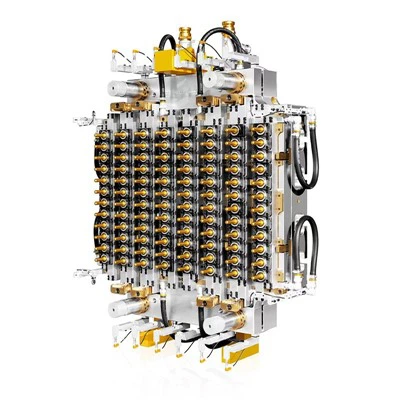


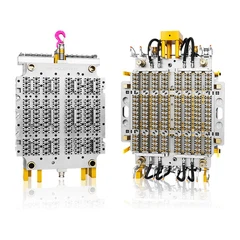


Hey there! As a supplier of PET Juice Bottle Preform Moulds, I've got a ton of experience in this field. Today, I'm gonna share with you how to measure the performance of a PET Juice Bottle Preform Mould.
1. Dimensional Accuracy
One of the most crucial aspects of a preform mould's performance is dimensional accuracy. The preforms produced by the mould need to have precise dimensions to ensure the final juice bottles are of the right size and shape. You can use a coordinate measuring machine (CMM) to measure the key dimensions of the preforms, such as diameter, length, and wall thickness.
A CMM is a highly accurate device that can measure the dimensions of an object with great precision. By taking multiple measurements at different points on the preform, you can get a comprehensive understanding of its dimensional accuracy. If the dimensions deviate from the specified tolerances, it could lead to issues like poor bottle fit, leakage, or even production line jams.
For example, if the diameter of the preform is too large, it might not fit properly into the blow - moulding machine, causing problems during the bottle - making process. On the other hand, if it's too small, the final bottle may not have the desired capacity.
2. Surface Finish
The surface finish of the preform also plays a vital role in the performance of the mould. A smooth surface finish on the preform is essential for a high - quality final product. You can use a surface roughness tester to measure the surface finish of the preforms.
A rough surface can cause problems such as poor label adhesion on the final juice bottle. It can also affect the appearance of the bottle, making it look unappealing to consumers. When the preform has a good surface finish, it not only looks better but also helps in the blow - moulding process, as it allows for more even stretching of the plastic.
3. Cavity Balance
In a multi - cavity PET Juice Bottle Preform Mould, cavity balance is extremely important. Each cavity in the mould should produce preforms with consistent quality and performance. You can measure cavity balance by weighing the preforms produced from each cavity.
If there is a significant difference in the weight of preforms from different cavities, it indicates a problem with cavity balance. This could be due to issues like uneven cooling, differences in the flow of plastic melt, or variations in the cavity dimensions. Cavity imbalance can lead to inconsistent bottle quality, with some bottles being thicker or thinner than others.
4. Cycle Time
Cycle time is another key factor in measuring the performance of a preform mould. It refers to the time it takes for the mould to produce one set of preforms. A shorter cycle time means higher production efficiency and lower costs.
You can measure the cycle time by using a stopwatch or a more advanced production monitoring system. By analyzing the cycle time, you can identify areas where improvements can be made, such as optimizing the cooling system or adjusting the injection parameters.
For instance, if the cooling time is too long, it could be because the cooling channels in the mould are not designed properly. By making some modifications to the cooling system, you can reduce the cycle time and increase the production output.
5. Mould Life
The lifespan of the mould is also an important performance indicator. A long - lasting mould means less frequent replacement and lower overall costs. You can estimate the mould life by keeping track of the number of preforms produced by the mould over time.
Factors that can affect the mould life include the quality of the mould material, the frequency of use, and the maintenance practices. Using high - quality mould materials and following proper maintenance procedures can significantly extend the mould life.
6. Ejection Performance
Proper ejection of the preforms from the mould is essential for smooth production. You can evaluate the ejection performance by observing how easily the preforms are ejected from the mould.
If there are issues with ejection, such as preforms getting stuck in the mould or being damaged during ejection, it can lead to production delays and increased waste. This could be due to problems like improper ejection pin design, insufficient lubrication, or excessive friction between the preform and the mould surface.
7. Compatibility with Production Equipment
The PET Juice Bottle Preform Mould should be compatible with the production equipment, such as the injection - moulding machine. You can test the compatibility by running a trial production run.
If the mould is not compatible with the production equipment, it can cause problems like poor plastic flow, uneven filling of the cavities, or excessive wear on the equipment. Ensuring compatibility from the start can save a lot of time and money in the long run.
Related Products
If you're also interested in other types of preform moulds, we have a wide range of options available. Check out our Carbonated Drink Preform Mold and Pet Preform Molds for Carbonated Drinks Bottle. And of course, our Juice Water Bottle Preform Mould is a great choice for your juice bottle production needs.

Let's Connect
If you're in the market for high - quality PET Juice Bottle Preform Moulds, don't hesitate to reach out. We're here to provide you with the best products and services. Whether you have questions about performance measurement, product specifications, or pricing, we're happy to help. Let's have a chat and see how we can meet your production requirements.
References
- "Plastic Injection Molding Handbook" by Dominik Johannaber
- "Mould Design for Plastics" by R. A. Mallinson
- Industry reports on PET preform manufacturing and mould performance