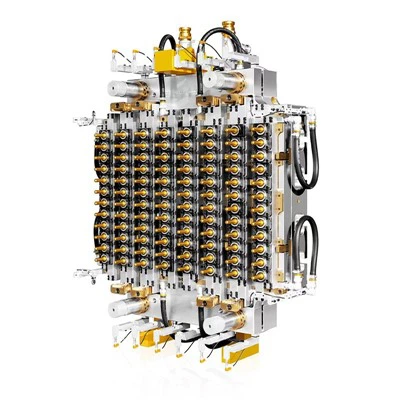


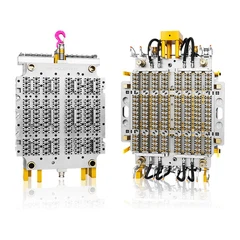


In the dynamic world of plastic manufacturing, the quality of preforms produced by a 96 cavity preform mold is a topic of significant interest. As a supplier of 96 cavity preform molds, I am well - versed in the intricacies of what makes these preforms high - quality.
Precision and Consistency
One of the most crucial aspects of preform quality is precision. A 96 cavity preform mold is designed to produce a large number of preforms in a single cycle. This requires an extremely high level of precision in the mold design and manufacturing. Each cavity must be identical in terms of dimensions, surface finish, and gating system. Any deviation in these parameters can lead to variations in the preforms.
For example, if the wall thickness of the preforms is not consistent across all 96 cavities, it can affect the final bottle's strength and appearance. A well - made 96 cavity preform mold ensures that the preforms have a uniform wall thickness, which is essential for the subsequent blow - molding process. This consistency also helps in reducing waste and improving the overall efficiency of the production line.
Material Compatibility
The quality of preforms is also highly dependent on the material used. Most preforms are made from PET (Polyethylene Terephthalate), a widely used thermoplastic polymer. A high - quality 96 cavity preform mold should be able to work with different grades of PET materials.
The mold must be designed to handle the specific properties of the PET resin, such as its melting point, viscosity, and shrinkage rate. If the mold is not compatible with the material, it can lead to issues like warping, cracking, or uneven filling of the cavities. For instance, if the melting temperature of the PET resin is not properly controlled during the injection process, it can result in preforms with poor clarity or mechanical properties.
Surface Finish
The surface finish of the preforms is another important quality factor. A smooth and defect - free surface is not only aesthetically pleasing but also crucial for the subsequent labeling and decoration processes. A 96 cavity preform mold should be able to produce preforms with a high - gloss surface finish.
This is achieved through careful polishing of the mold cavities. The use of advanced machining techniques and high - quality tool steels can help in achieving a mirror - like finish on the preforms. A good surface finish also reduces the friction during the blow - molding process, which can improve the overall quality of the final bottles.
Durability and Longevity
A high - quality 96 cavity preform mold should be durable and have a long service life. The mold is subjected to high pressures and temperatures during the injection molding process. Therefore, it must be made from high - strength materials that can withstand these conditions.
Regular maintenance and proper handling of the mold are also essential for its longevity. A well - maintained mold can produce high - quality preforms for a long time, reducing the need for frequent mold replacements. This not only saves costs but also ensures a consistent supply of high - quality preforms.
Applications of 96 Cavity Preform Molds
The preforms produced by 96 cavity preform molds have a wide range of applications. They are commonly used in the production of beverage bottles, including Juice Water Bottle Preform Mould. These preforms are designed to be blown into bottles of various shapes and sizes, suitable for different types of beverages.
Another important application is in the production of PET Preform Injection Mould 96cav. These preforms are used in the manufacturing of containers for food products, cosmetics, and other consumer goods. The high - volume production capability of 96 cavity molds makes them ideal for large - scale manufacturing.
Carbonated Drink Preform Mold is also a significant application. The preforms for carbonated drinks need to have specific properties, such as high gas barrier properties, to ensure the carbonation is retained in the final bottle. A well - designed 96 cavity preform mold can produce preforms that meet these requirements.
Quality Control in Preform Production
To ensure the quality of preforms produced by a 96 cavity preform mold, a comprehensive quality control system is necessary. This includes in - process inspections and final product testing.
During the injection molding process, parameters such as temperature, pressure, and injection speed need to be closely monitored. Any deviation from the set values can affect the quality of the preforms. Additionally, visual inspections are carried out to check for defects such as flash, bubbles, or uneven wall thickness.
Final product testing involves measuring the physical properties of the preforms, such as their weight, dimensions, and mechanical strength. These tests help in ensuring that the preforms meet the required standards and specifications.
The Role of Technology in Improving Preform Quality
Advancements in technology have played a significant role in improving the quality of preforms produced by 96 cavity preform molds. Computer - aided design (CAD) and computer - aided manufacturing (CAM) technologies are used to design and manufacture the molds with high precision.
Simulation software can be used to predict the flow of the molten plastic in the mold cavities, allowing for optimization of the gating system and cooling channels. This helps in reducing the chances of defects and improving the overall quality of the preforms.
In addition, the use of advanced sensors and control systems in the injection molding machines enables real - time monitoring and adjustment of the process parameters. This ensures that the preforms are produced consistently with high quality.


Conclusion
The quality of preforms made by a 96 cavity preform mold is determined by several factors, including precision, material compatibility, surface finish, durability, and quality control. As a supplier of 96 cavity preform molds, we are committed to providing molds that can produce high - quality preforms for various applications.
If you are in the market for high - quality 96 cavity preform molds or have any questions about preform production, we encourage you to contact us for a detailed discussion. We are ready to work with you to meet your specific requirements and help you achieve the best results in your plastic manufacturing process.
References
- "Plastic Injection Molding Handbook" by O. O. Onyia
- "PET Packaging Technology" by J. L. Koenig