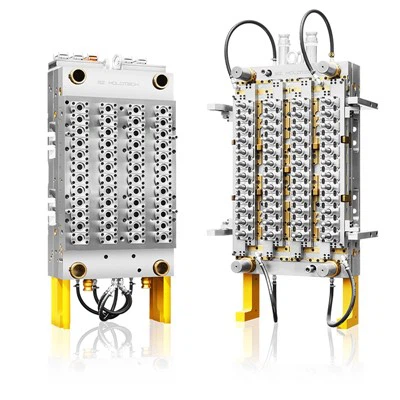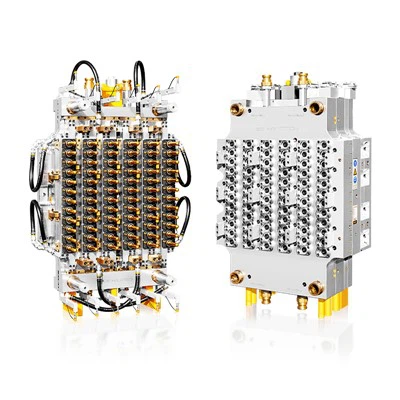


As the global demand for PET packaging continues to grow, PET preform molds have become essential manufacturing tools for producing water bottles, beverage containers, edible oil bottles, personal care packaging, and pharmaceutical containers. High-quality PET preform molds not only determine product consistency and appearance but also significantly impact production efficiency, material consumption, and long-term operational costs.
For packaging manufacturers and brand owners, understanding the PET preform mold customization process is crucial when selecting a reliable PET preform mold manufacturer. This guide explains every stage of the process, from initial consultation to final production support.

PET Preform Mold Customization Process Overview
| Stage | Main Activities | Objective |
|---|---|---|
| Requirement Analysis | Product specification review | Define project requirements |
| Mold Design | 3D modeling and engineering | Optimize mold performance |
| Material Selection | Steel and component selection | Maximize mold lifespan |
| Precision Manufacturing | CNC and EDM machining | Ensure accuracy |
| Heat Treatment | Hardness enhancement | Improve durability |
| Mold Assembly | Component integration | Guarantee reliability |
| Mold Trial | Sample testing and validation | Verify performance |
| Quality Inspection | Precision and functionality testing | Meet customer standards |
| Packaging & Shipping | Protection and transportation | Safe delivery |
| Technical Support | Installation and maintenance assistance | Long-term productivity |
Why Choose SZ-MOLDTECH for PET Preform Mold Manufacturing?
SZ-MOLDTECH specializes in the design and production of high-performance PET preform molds for global packaging manufacturers.
Key advantages include:
Extensive experience in high-cavity PET preform molds
Available in 48, 72, 96, 128, and 144 cavityconfigurations
STAVAX ESR stainless steel forming components
3Cr13H stainless steel mold structure
HUSKY-standard hot runner system
Precision tolerance control within ±0.005 mm
Compatibility with major injection molding systems
Comprehensive project management and technical support
These advantages help customers achieve higher productivity, lower operating costs, and consistent product quality.


Stage 1: Requirement Analysis and Project Evaluation
Every successful PET preform mold project begins with a detailed discussion between the customer and the engineering team.
Key information typically includes:
Preform weight
Bottle capacity
Neck finish standard
Wall thickness requirements
End-use application
Injection molding machine brand
Machine tonnage
Target production output
Packaging Applications
| Industry | Common Products |
|---|---|
| Beverage Packaging | Water bottles, juice bottles |
| Food Packaging | Edible oil containers |
| Personal Care Packaging | Shampoo bottles, detergent bottles |
| Pharmaceutical Packaging | Medical containers |
Accurate project data allows engineers to develop the most efficient PET preform mold solution
.
Stage 2: PET Preform Mold Design and Engineering
Once the project requirements are confirmed, the engineering team begins the mold design process.
Key design considerations include:
The preform geometry is optimized according to bottle design and blow molding requirements.
Balanced melt flow distribution ensures consistent preform quality across all cavities.
Efficient cooling channels reduce cycle time and improve production efficiency.
Depending on production requirements, molds can be configured as:
A well-engineered mold design maximizes productivity while maintaining dimensional consistency.
Stage 3: High-Performance Material Selection
Material selection plays a critical role in mold durability, product quality, and production stability.
STAVAX ESR Stainless Steel for Forming Components
The key forming components are manufactured using premium STAVAX ESR stainless steel.
| Component | Material |
|---|---|
| Gate Insert | STAVAX ESR |
| Cavity | STAVAX ESR |
| Neck Ring | STAVAX ESR |
| Core | STAVAX ESR |
Benefits of STAVAX ESR
Excellent corrosion resistance
Superior polishing capability
Outstanding wear resistance
Long-term dimensional stability
Enhanced transparency and surface quality of PET preforms
These characteristics make STAVAX ESR ideal for high-volume PET packaging production.
3Cr13H Stainless Steel for Mold Structure
The mold structure utilizes durable 3Cr13H stainless steel.
| Component | Material |
|---|---|
| Core Plate | 3Cr13H |
| Cavity Plate | 3Cr13H |
| Stripper Plate | 3Cr13H |
| Slide Frame | 3Cr13H |
Benefits of 3Cr13H
High structural strength
Excellent corrosion resistance
Stable performance under continuous operation
Reduced deformation risk
Suitable for high-cavity mold applications
This material provides the rigidity required for long-term production stability.
The hot runner system is one of the most critical elements of a PET preform mold.
| Component | Specification |
|---|---|
| Manifold System | DIN 1.2344 |
| Nozzle Stack | HUSKY Standard |
| Heating System | MHT Standard |
| Electrical Connection | E-PLAN |
Advantages include:
Uniform melt distribution
Consistent preform weight
Reduced material waste
Improved production efficiency
Stable processing conditions
Standard Material Configuration of SZ-MOLDTECH PET Preform Molds
| System | Component | Material |
|---|---|---|
| Forming System | Gate Insert | STAVAX ESR |
| Forming System | Cavity | STAVAX ESR |
| Forming System | Neck Ring | STAVAX ESR |
| Forming System | Core | STAVAX ESR |
| Forming System | Cooling Tube | DIN 1.4301 |
| Forming System | Lock Ring | DIN 1.2344 |
| Forming System | Cone Ring | DIN 1.2344 |
| Mold Structure | Core Plate | 3Cr13H |
| Mold Structure | Cavity Plate | 3Cr13H |
| Mold Structure | Stripper Plate | 3Cr13H |
| Mold Structure | Slide Frame | 3Cr13H |
| Hot Runner System | Manifold System | DIN 1.2344 |
| Hot Runner System | Nozzle Stack | HUSKY Standard |
| Hot Runner System | Heating System | MHT Standard |
| Hot Runner System | Electrical System | E-PLAN |
Stage 4: Precision Manufacturing
After design approval, mold production begins.
The manufacturing process includes:
Ensures precise machining of complex mold structures.
Used for intricate features requiring high accuracy.
Provides micron-level dimensional control.
Improves cavity surface quality and preform appearance.
Advanced machining technology enables precision tolerances within ±0.005 mm.
Stage 5: Heat Treatment and Mold Assembly
Heat treatment improves durability and dimensional stability.
Typical processes include:
Vacuum heat treatment
Stress relief treatment
Precision grinding
After heat treatment, the mold is assembled with:
Hot runner components
Cooling system
Guide system
Safety monitoring components
Every assembly stage follows strict quality standards.
Stage 6: Mold Trial and Performance Validation
Before delivery, each mold undergoes a comprehensive trial run.
Inspection items include:
Ensuring all cavities produce uniform preforms.
Verifying compatibility with closures and caps.
Checking for:
Black spots
Bubbles
Flow marks
Surface defects
Adjusting process parameters for maximum productivity.
Any necessary modifications are completed before final approval.
Stage 7: Quality Inspection and Customer Acceptance
Comprehensive inspection procedures ensure every mold meets performance expectations.
| Inspection Item | Equipment |
|---|---|
| Dimensional Accuracy | Coordinate Measuring Machine (CMM) |
| Surface Finish | Surface Roughness Tester |
| Concentricity | Precision Measuring Equipment |
| Hardness | Rockwell Hardness Tester |
| Functional Testing | Production Simulation Testing |
These inspections ensure consistent quality and reliable production performance.
Stage 8: Packaging and Shipping
Proper packaging protects the mold during transportation.
Standard protection includes:
Anti-rust treatment
Moisture protection
Secure wooden crate packaging
Shock-resistant protection
This ensures safe delivery to customers worldwide.
Stage 9: Installation and Technical Support
SZ-MOLDTECH provides comprehensive after-sales support to help customers achieve efficient production.
Services include:
Mold installation guidance
Injection process optimization
Operator training
Online technical support
Spare parts supply
Preventive maintenance recommendations
Professional support helps customers maximize production efficiency and mold lifespan.
Conclusion
PET preform mold customization involves far more than manufacturing a mold. It is a complete engineering process that includes requirement analysis, design optimization, material selection, precision machining, performance testing, and long-term technical support.
As a professional PET Preform Mold Manufacturer, SZ-MOLDTECH combines STAVAX ESR forming components, 3Cr13H mold structures, and internationally recognized hot runner systems to deliver high-precision, high-efficiency, and long-lasting PET preform mold solutions.
Whether for water bottles, beverage containers, edible oil packaging, personal care products, or pharmaceutical applications, choosing an experienced PET preform mold supplier can help manufacturers improve productivity, reduce production costs, and maintain a competitive advantage in the global packaging industry.
Frequently Asked Questions (FAQ)
Customers should provide preform drawings, neck finish specifications, preform weight, bottle capacity, injection machine details, and production targets.
STAVAX ESR offers excellent corrosion resistance, superior polishing performance, and long-term dimensional stability, making it ideal for PET packaging applications.
High-cavity molds increase production output, improve equipment utilization, reduce labor costs, and lower manufacturing costs per preform.
A high-quality hot runner system ensures balanced melt distribution, consistent preform weight, improved efficiency, and reduced material waste.
Regular cleaning, cooling system maintenance, hot runner inspection, and proper storage practices help maximize mold lifespan.
PET preform molds are widely used in beverage packaging, food packaging, personal care products, household chemicals, and pharmaceutical packaging industries.