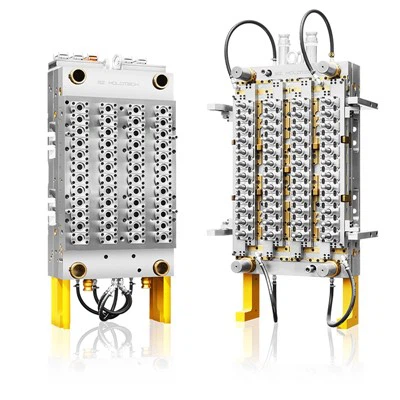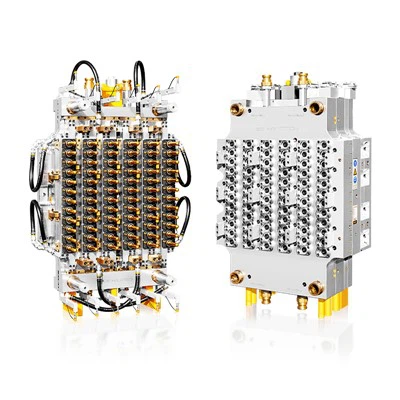


The quality of a PET bottle begins long before the blowing process. It starts with a precisely engineered PET preform mold. From cavity accuracy and hot runner balance to cooling efficiency and neck finish control, every aspect of mold design can directly influence preform quality, production efficiency, and the performance of the final bottle.
For PET packaging manufacturers, consistent preform quality is essential for stable bottle production. A properly designed PET Preform Mold can help maintain accurate preform weight, uniform wall thickness, stable dimensions, good transparency, and reliable mechanical performance. At the same time, mold design has a direct impact on production cycle time, material waste, maintenance requirements, and long-term operating costs.
For this reason, selecting a professional PET Preform Mold Manufacturer requires more than simply choosing the desired cavity number. The mold must be designed according to the preform structure, bottle application, filling method, production output, and PET Injection Molding Machine System.

Key Factors In PET Preform Mold Design
| PET Preform Mold Design Factor | Impact on Preform Quality | Production Value |
|---|---|---|
| Cavity Precision | Maintains consistent preform dimensions and weight | Reduces cavity-to-cavity variation |
| Hot Runner Balance | Provides uniform melt distribution | Improves filling consistency |
| Cooling Design | Controls cavity temperature effectively | Supports stable cycles and dimensional accuracy |
| Gate Design | Influences material flow and gate appearance | Helps reduce molding defects |
| Mold Steel | Affects wear resistance and dimensional stability | Supports long-term production |
| Venting | Allows trapped air to escape during filling | Reduces burn marks and incomplete filling |
| Neck Finish Accuracy | Maintains precise neck dimensions | Supports reliable bottle sealing |
Cavity Precision Directly Influences Preform Consistency
For a multi-cavity PET Preform Mold, maintaining consistent cavity dimensions is essential. Even small differences in cavity machining can lead to variations in preform weight, length, diameter, wall thickness, or neck dimensions.
This becomes increasingly important as the cavity count increases. In48 Cavity, 72 Cavity, 96 Cavity, 128 Cavity, and 144 Cavity PET Preform Molds, precision machining and strict dimensional inspection are necessary to achieve consistent production across all cavities.
A professionally engineered mold should ensure that each cavity performs consistently during continuous injection molding. This helps reduce cavity-to-cavity variation and provides more stable preforms for downstream bottle blowing.
Hot Runner Balance Affects Melt Distribution
The hot runner is one of the most important parts of a PET Preform Mold. During injection molding, the molten PET material needs to reach each cavity under balanced flow and temperature conditions.
An improperly balanced hot runner layout may result in uneven filling, inconsistent preform weight, flow variation, or differences in material distribution between cavities.
A well-designed Hot Runner System helps maintain balanced melt flow and stable temperature control. This contributes to consistent preform weight and appearance while supporting efficient high-volume production.
For manufacturers producing large quantities of PET preforms, hot runner design is therefore closely related to production stability and product consistency.
Cooling Design Influences Cycle Time and Dimensional Stability
Cooling efficiency is another critical consideration in PET Preform Mold Design. During injection molding, the PET material must be cooled evenly to achieve the required shape and dimensions.
If cooling is uneven, different areas of the preform may solidify at different rates. This can contribute to dimensional variation, deformation, or unstable production performance.
An optimized cooling design helps remove heat efficiently and maintain more consistent temperatures throughout the mold. This allows manufacturers to achieve stable cycle times while maintaining preform quality.
For high-volume PET packaging production, an effective cooling design can also contribute to higher output and reduced production waste.
Gate Design Affects Preform Appearance
The gate is another important area of PET Preform Mold Design. Its position, structure, and processing accuracy can influence material flow, gate appearance, and the quality of the preform base.
An optimized gate design helps achieve stable filling and consistent material distribution. It can also reduce common molding issues and improve the appearance of the finished preform.
For applications where preform appearance and bottle quality are critical, gate design should be considered together with the hot runner, cavity structure, and cooling system rather than treated as an isolated component.
Preform Design Must Match the Final Bottle Application
A PET Preform Mold should always be designed around the requirements of the final PET bottle. The engineering process should begin with the intended bottle application and filling method before determining the preform structure and mold configuration.
Different applications may require different preform designs, including:
Cold-fill bottled water
Carbonated beverages
Hot-fill beverages
Aseptic packaging
Edible oil
Food packaging
Cosmetic packaging
Pharmaceutical packaging
The final application affects important preform parameters such as neck finish, preform weight, length, diameter, and wall thickness distribution.
Therefore, the correct process is to determine the filling method, define the bottle requirements, establish the PET preform design, confirm key parameters such as neck finish and preform weight, and then customize the PET Preform Mold.
This approach helps ensure that the mold is engineered around actual production requirements instead of using a standard mold structure that may not fully match the customer's application.
PET Injection Molding Machine System Compatibility
Machine compatibility is also an important factor when purchasing a PET Preform Mold. The mold design needs to match the technical requirements of the customer'sPET Injection Molding Machine System, including machine dimensions, mold mounting, injection configuration, cavity arrangement, and production requirements.
Before mold manufacturing begins, the mold design should be reviewed against the customer's machine specifications. This helps ensure proper installation and stable operation after delivery.
As a professional PET Preform Mold Manufacturer, SZ-MOLDTECH focuses on customized PET preform mold solutions for high-volume PET injection molding applications. The company provides PET preform molds covering different cavity configurations and supports engineering requirements based on preform design, production capacity, and machine compatibility.