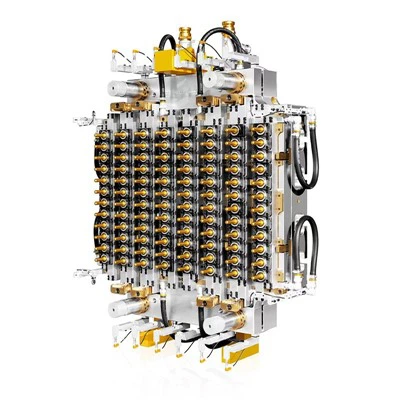


What is the cooling system of a Narrow Neck PET Mould?
As a supplier of Narrow Neck PET Mould, I've witnessed firsthand the pivotal role that the cooling system plays in the production process. In this blog, I'll delve into the intricacies of the cooling system of a Narrow Neck PET Mould, exploring its importance, components, and how it impacts the quality of the final product.
The Importance of the Cooling System
The cooling system in a Narrow Neck PET Mould is not just an accessory; it's a fundamental part of the manufacturing process. The primary goal of the cooling system is to rapidly and uniformly cool the molten PET material injected into the mould. This is crucial for several reasons.
Firstly, it significantly reduces the cycle time. In mass production, every second counts. A well - designed cooling system can cool the preform quickly, allowing for faster ejection and subsequent injection of the next batch. This leads to higher production rates and increased efficiency.
Secondly, proper cooling ensures the dimensional stability of the preform. PET is a thermoplastic material, and if it cools unevenly, it can lead to warping, shrinkage, or other defects. A uniform cooling process guarantees that the preform retains its intended shape and size, meeting the strict quality standards required in the packaging industry.


Components of the Cooling System
The cooling system of a Narrow Neck PET Mould consists of several key components, each with its own function.
-
Cooling Channels
These are the pathways through which the cooling medium, usually water, flows. The design of the cooling channels is critical. They need to be strategically placed around the cavity of the mould to ensure uniform cooling. In a Narrow Neck PET Mould, the channels are often designed to follow the shape of the preform, with a higher density of channels in areas that require more rapid cooling, such as the neck and the body of the preform. -
Cooling Medium
Water is the most commonly used cooling medium due to its high heat capacity and availability. It can efficiently absorb and carry away the heat from the mould. The water is circulated through the cooling channels at a controlled temperature and flow rate. Some advanced cooling systems may also use other cooling media, such as refrigerants, for more precise temperature control. -
Pumps and Valves
Pumps are responsible for circulating the cooling medium through the system. They ensure a continuous flow of water or other cooling agents, maintaining the desired pressure and flow rate. Valves are used to regulate the flow of the cooling medium, allowing for adjustments based on the specific requirements of the moulding process. -
Temperature Sensors
These sensors are placed at various points in the mould to monitor the temperature. They provide real - time data that can be used to adjust the cooling process. For example, if the temperature in a particular area of the mould is too high, the flow rate of the cooling medium can be increased to bring the temperature down.
How the Cooling System Affects Product Quality
The quality of the final product is directly influenced by the performance of the cooling system.
-
Surface Finish
A well - cooled preform has a smooth and glossy surface finish. If the cooling is uneven, it can result in surface defects such as sink marks, streaks, or dull spots. These defects not only affect the appearance of the preform but can also impact its functionality, especially in applications where a high - quality surface finish is required. -
Mechanical Properties
Proper cooling ensures that the PET material solidifies in a way that maximizes its mechanical properties. For example, a preform that is cooled too quickly may have internal stresses, which can lead to cracking or reduced strength. On the other hand, a preform that cools too slowly may have a lower crystallinity, resulting in a softer and less rigid product. -
Dimensional Accuracy
As mentioned earlier, uniform cooling is essential for maintaining the dimensional accuracy of the preform. Any deviation from the intended dimensions can cause problems during the subsequent blow - moulding process or when the preform is used in the final packaging application.
Advanced Cooling Technologies
In recent years, there have been significant advancements in cooling technologies for Narrow Neck PET Moulds.
-
Conformal Cooling
Conformal cooling channels are designed to follow the exact shape of the mould cavity. This allows for more efficient and uniform cooling compared to traditional straight - drilled cooling channels. Conformal cooling can reduce cycle times by up to 30% and improve the quality of the preform by minimizing temperature variations. -
Cooling Optimization Software
There are now software tools available that can simulate the cooling process in a Narrow Neck PET Mould. These tools can analyze the heat transfer within the mould and suggest optimal cooling channel designs. By using these software tools, manufacturers can fine - tune the cooling system to achieve the best possible results.
Our Offerings as a Narrow Neck PET Mould Supplier
As a supplier of Narrow Neck PET Moulds, we understand the importance of a high - performance cooling system. Our moulds are designed with state - of - the - art cooling technologies to ensure rapid and uniform cooling. We offer a range of Narrow Neck PET Moulds, including PET Preform Tube Molds and Energy Saving Preform Mold.
Our Narrow Neck PET Mould is engineered to meet the highest quality standards. The cooling system in our moulds is carefully designed to provide optimal cooling performance, resulting in high - quality preforms with excellent dimensional stability and surface finish.
If you are in the market for a Narrow Neck PET Mould, we invite you to contact us for a detailed discussion. Our team of experts can help you select the right mould for your specific needs and provide you with all the information you need to make an informed decision. Whether you are a small - scale producer or a large - scale manufacturer, we have the solutions to meet your production requirements.
References
- "Plastic Injection Molding Handbook" by Dominik D. Kleijnen
- "Thermoplastics Processing" by James F. Carley
- Industry research reports on PET moulding technology