


Behind every perfectly formed plastic bottle lies a highly engineered starting point that most end users never see. This initial stage determines not only the bottle's clarity and strength but also production efficiency, material consumption, and long-term manufacturing cost. In modern packaging industries, the true foundation of quality lies in the precision engineering of PET preform molds.

Industry Role and Importance of PET Preform Molds
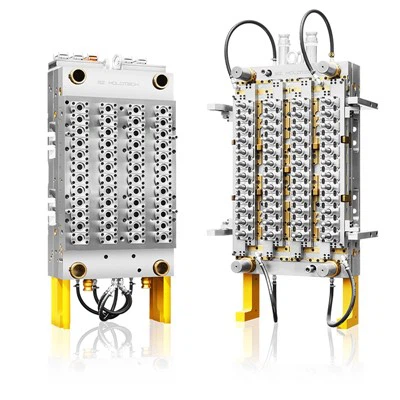
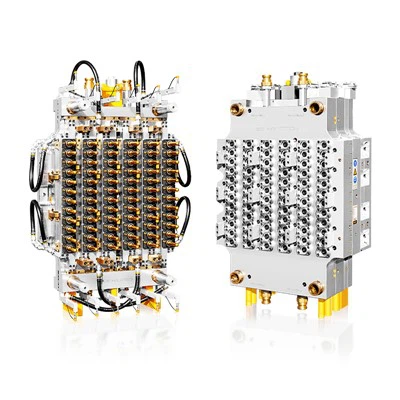
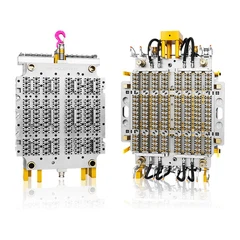
A PET preform mold is a high-precision injection mold used to produce PET preforms, which are later blow-molded into bottles. It is a complex system combining multi-cavity design, hot runner technology, and advanced thermal control.
The preform itself determines final bottle performance, including mechanical strength, transparency, and wall thickness consistency.
Key functions include:
Determining bottle clarity and surface finish
Controlling wall thickness distribution
Improving impact resistance after blow molding
Optimizing production cycle time and output efficiency
In large-scale beverage and packaging production,PET preform molds are a core productivity asset.
Core Technical Elements of PET Preform Mold Design
PET preform mold design is a systematic engineering process involving thermal balance, cavity layout, material selection, and precision machining.
Cavity Layout Design
Cavity count directly defines production capacity and mold classification.
| Cavity Count | Production Level | Characteristics |
|---|---|---|
| 48 cavities | Standard production | Stable and mature |
| 72 cavities | Medium–high production | Balanced efficiency |
| 96 cavities | High-speed production | Requires strong thermal balance |
| 128 cavities | Advanced production system | High precision demand |
| 144 cavities | Ultra-high output line | Extreme stability requirement |
As cavity numbers increase, the difficulty of maintaining thermal and injection balance rises significantly.
Hot Runner System Technology
The hot runner system is one of the most critical technologies in PET preform molds.
Functions include:
Maintaining stable molten PET flow
Eliminating cold runner waste
Improving material utilization efficiency
Ensuring uniform cavity filling
Advanced systems use multi-point balanced control to ensure synchronized injection across all cavities.

Cooling System Optimization
Cooling design is the key factor affecting cycle time.
Cooling accounts for more than 60% of the total cycle time
Uneven cooling leads to deformation and inconsistent crystallization
Optimized water channel design significantly improves output efficiency
Optimization goals:
Uniform heat dissipation
Reduced cooling cycle time
Stable dimensional accuracy
Mold Steel and Surface Treatment
PET preform molds operate under high temperature and high pressure, requiring premium materials:
High mirror-polish steel for transparency
Strong corrosion resistance
High hardness and fatigue resistance
Stable heat treatment performance
PET Preform Mold Manufacturing Process
| Stage | Technical Requirement | Purpose |
|---|---|---|
| Design analysis | Shrinkage & flow simulation | Ensure manufacturability |
| CNC machining | Micron-level precision | Guarantee consistency |
| Heat treatment | Improve hardness | Extend mold life |
| Mirror polishing | Optical surface finish | Enhance clarity |
| Assembly & testing | Full-load trial run | Ensure stability |
PET Preform Injection Molding Process
PET resin is highly moisture-sensitive and must be fully dried to avoid degradation and bubbles.
Molten PET is injected at 260–280°C into the cavities at high speed.
Compensates shrinkage and ensures dimensional stability.
The most time-consuming stage that determines production cycle efficiency.
Finished preforms are ejected and transferred to blow molding.
Technical Advantages of SZ-MOLDTECH in PET Preform Molds
SZ-MOLDTECH focuses on high-end PET preform mold engineering, especially in multi-cavity and high-speed production systems.
Core strengths include:
48–144 cavity high-precision mold capability
Advanced hot runner balancing technology
Micron-level CNC machining accuracy
Optical-grade mirror polishing technology
Long-life mold structure design
High-speed production line compatibility
Through integrated engineering design, SZ-MOLDTECH delivers both high productivity and long-term operational stability.
PET Preform Mold Key Technology Comparison Table
| Technical Module | Standard Mold | High-End Preform Mold |
|---|---|---|
| Cavity count | 48 cavities | 72 / 96 / 128 / 144 cavities |
| Hot runner system | Basic system | Multi-point balanced hot runner system |
| Cooling design | Conventional channels | Optimized uniform cooling system |
| Machining precision | Standard CNC | Micron-level precision machining |
| Surface finishing | Normal polishing | Optical mirror polishing |
| Production cycle | Medium | High-speed cycle |
| Structural stability | Standard | High-speed continuous stability |
| Steel material | Standard mold steel | High-grade corrosion-resistant steel |
Key Factors Affecting Mold Performance
Several factors directly impact PET preform mold performance:
PET intrinsic viscosity (IV value)
Hot runner temperature balance
Cooling efficiency and uniformity
Cavity machining consistency
Injection molding machine compatibility
Mold steel thermal stability
Even minor deviations in any factor can affect final preform quality.
Industry Development Trends
The PET preform mold industry is evolving toward:
Higher cavity counts (beyond 144 cavities)
Faster cycle time and higher output efficiency
Smart temperature control systems
Energy-efficient hot runner technologies
Digital monitoring and automation systems
Smart manufacturing is becoming the dominant direction of development.
Frequently Asked Questions (FAQ)
What is the service life of a PET preform mold?
High-quality molds can achieve millions to tens of millions of cycles depending on maintenance and steel quality.
Can preform molds be customized?
Yes. Neck finish, weight, and bottle design can all be customized according to requirements.
Do high-cavity molds affect stability?
With advanced hot runner balancing and precision engineering, high-cavity molds can maintain excellent stability.
What is the typical delivery time?
It varies depending on complexity and cavity count, usually from several weeks to a few months.
How can production defects be reduced?
Key factors include hot runner balance, cooling uniformity, and proper raw material drying.
Are PET preform molds compatible with all PET materials?
They are compatible with most PET resins, but processing parameters must be adjusted based on IV value.
Conclusion
PET preform mold manufacturing is a highly sophisticated engineering discipline that integrates precision machining, thermal dynamics, material science, and injection molding technology. From cavity layout to hot runner systems, and from cooling optimization to mirror polishing, every detail directly influences final bottle quality and production efficiency.
As the industry moves toward higher output, lighter packaging, and intelligent manufacturing systems, advanced multi-cavity PET preform molds will continue to dominate global demand. Companies with strong system engineering capabilities and precision manufacturing expertise will remain at the forefront of this competitive market.