


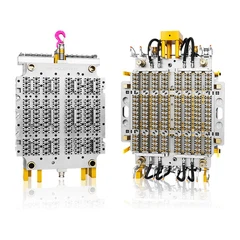

Scientific Production Planning and Scheduling
1. Order Assessment and Prioritization
Upon receiving a customer order, the manufacturer needs to conduct a comprehensive assessment, including mold complexity, production cycle, and material requirements. Based on customer delivery requirements and order importance, production priorities should be rationally allocated to ensure that critical orders are prioritized for production.
2. Developing a Detailed Production Plan
The manufacturer needs to develop a detailed production plan, clearly defining the time nodes for each stage, including design, material procurement, processing, assembly, and debugging. Precise time management helps avoid delays during production.
3. Dynamically Adjusting Production Schedule
During production, unexpected situations such as equipment failure and material shortages may occur. The manufacturer needs to establish a dynamic adjustment mechanism to optimize the production schedule in a timely manner, ensuring that the overall production progress is not affected.
Supply Chain Optimization and Management
1. Stable Raw Material Supply
The production of PET preform molds requires high-quality steel, standard parts, and other raw materials. The manufacturer needs to establish long-term cooperative relationships with reliable suppliers to ensure a stable supply of raw materials and avoid production delays caused by material shortages.
2. Inventory Management Optimization
For commonly used raw materials and standard parts, manufacturers can establish a reasonable inventory management system to ensure rapid access to inventory resources in emergencies, shortening the production cycle.
3. Supply Chain Collaboration
Manufacturers need to maintain close communication with suppliers, understand the dynamics of the supply chain in real time, anticipate potential risks, and develop countermeasures.
Technology and Equipment Upgrades
1. Introduction of Advanced Processing Equipment
Using high-precision CNC machining centers, EDM machines, and other advanced equipment can significantly improve mold processing efficiency and quality, shortening the production cycle.
2. Mold Design Optimization
Optimizing mold structure design using CAD/CAE and other design software reduces processing difficulty and assembly time. Simultaneously, adopting standardized design reduces the complexity of mold production.
3. Automated Production
Where conditions permit, introducing automated production lines reduces manual operation, improves production efficiency, and reduces the risk of human error.