



What is the holding pressure for a PET bottle preform mold?
As a supplier of PET Bottle Preform Molds, I often encounter questions from clients about various aspects of the mold operation, and one of the frequently asked questions is about the holding pressure for a PET bottle preform mold. In this blog, I'll delve into what holding pressure is, its importance, how to determine the appropriate holding pressure, and its impact on the quality of PET bottle preforms.
Understanding Holding Pressure
Holding pressure, in the context of PET bottle preform molding, is the pressure applied to the molten PET material in the mold cavity after the injection phase is completed. During the injection process, the molten PET is forced into the mold cavity at a high speed and pressure. Once the cavity is filled, the holding pressure comes into play. Its main purpose is to compensate for the shrinkage that occurs as the PET material cools and solidifies.
PET is a thermoplastic polymer, and like all thermoplastics, it undergoes significant volume changes during the cooling process. As the molten PET loses heat and transitions from a liquid to a solid state, it contracts. Without the application of holding pressure, this shrinkage would lead to defects in the preform, such as sink marks, voids, and inconsistent wall thickness.
Importance of Holding Pressure
The proper application of holding pressure is crucial for the production of high - quality PET bottle preforms. Here are some key reasons:
1. Dimensional Accuracy
Holding pressure ensures that the preform maintains its intended shape and dimensions. By compensating for shrinkage, it helps to produce preforms with consistent wall thickness and accurate overall size. This is essential because the preforms will later be blown into bottles, and any dimensional inaccuracies in the preform can lead to problems during the blow - molding process and affect the final bottle quality.
2. Surface Finish
A well - applied holding pressure can improve the surface finish of the preform. It helps to fill the mold cavity completely, eliminating any air pockets or surface irregularities. This results in a smooth and glossy surface, which is not only aesthetically pleasing but also important for the performance of the bottle, as it can affect the barrier properties and the ability to print labels on the bottle.
3. Mechanical Properties
The holding pressure can also influence the mechanical properties of the preform. By ensuring proper packing of the material in the mold cavity, it can enhance the strength and stiffness of the preform. This is important for the subsequent blow - molding process and the overall durability of the final bottle.
Determining the Appropriate Holding Pressure
Determining the right holding pressure for a PET bottle preform mold is not a one - size - fits - all process. It depends on several factors:
1. Material Properties
The type and grade of PET resin used can significantly affect the required holding pressure. Different PET resins have different shrinkage rates and flow characteristics. For example, some high - viscosity PET resins may require higher holding pressures to ensure proper filling and compensation for shrinkage.
2. Mold Design
The design of the PET bottle preform mold, including the cavity size, shape, and gate design, also plays a role in determining the holding pressure. A mold with a complex shape or a small gate may require higher holding pressures to ensure that the molten PET can flow into all parts of the cavity.
3. Processing Conditions
The injection speed, temperature, and cooling time also interact with the holding pressure. For instance, if the injection speed is too high, it may cause the material to shear and affect the holding pressure requirements. Similarly, the cooling time can influence the shrinkage rate, which in turn affects the holding pressure needed.
To determine the appropriate holding pressure, it is often necessary to conduct a series of trial runs. During these trials, different holding pressures are applied, and the resulting preforms are inspected for quality. The goal is to find the holding pressure that produces preforms with the best combination of dimensional accuracy, surface finish, and mechanical properties.
Impact of Holding Pressure on Preform Quality
The holding pressure has a direct impact on the quality of the PET bottle preforms. If the holding pressure is too low:
1. Shrinkage Defects
As mentioned earlier, insufficient holding pressure will not be able to compensate for the shrinkage of the PET material during cooling. This can result in sink marks on the surface of the preform, voids inside the preform, and inconsistent wall thickness. These defects can weaken the preform and make it difficult to blow - mold into a high - quality bottle.
2. Poor Surface Finish
Low holding pressure may not allow the molten PET to fully fill the mold cavity, leading to a rough or uneven surface finish. This can affect the appearance of the final bottle and may also reduce its barrier properties.
On the other hand, if the holding pressure is too high:
1. Over - packing
Excessive holding pressure can cause over - packing of the material in the mold cavity. This can lead to high internal stresses in the preform, which may cause cracking or deformation during the blow - molding process. It can also increase the cycle time and energy consumption of the molding process.
2. Gate Freezing
High holding pressure can cause the gate to freeze prematurely, preventing the proper flow of the molten PET into the cavity. This can result in incomplete filling of the preform and other defects.
Our Offerings as a PET Bottle Preform Mold Supplier
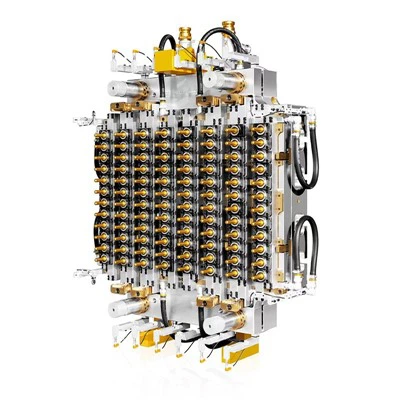
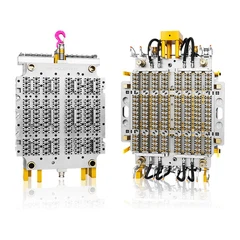
As a leading supplier of PET Bottle Preform Mold, we understand the importance of holding pressure in the production of high - quality preforms. Our molds are designed with precision to ensure optimal flow of the molten PET material and to allow for accurate control of the holding pressure.
We also offer PET Preform Tube Molds and PET Preform Cold Half Mold, which are essential components in the preform molding process. Our team of experts can provide guidance on the appropriate holding pressure for different types of molds and PET resins.
If you are in the market for high - quality PET bottle preform molds and need assistance with determining the right holding pressure for your specific application, we are here to help. Contact us to discuss your requirements and start a successful partnership.


References
- "Plastic Injection Molding Handbook" by Dominick V. Rosato, Donald V. Rosato, and Joseph P. Collins.
- "Thermoplastics: Materials, Processing, and Applications" by James F. Carley.