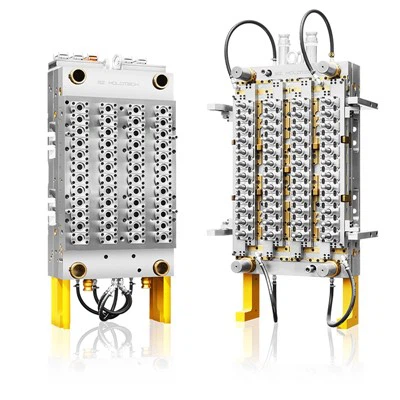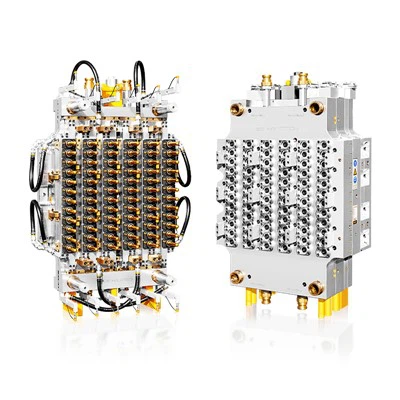


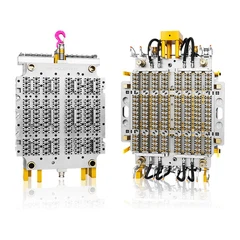

PET preforms are the foundation of modern plastic bottle production, widely used in packaging for beverages, mineral water, pharmaceuticals, cosmetics, health products, and chemical reagents. The production process follows the two-step method, which consists of injection molding to create preforms with precise neck finish, height, and wall thickness, followed by blow molding to shape the final bottle. This two-step process ensures excellent product consistency, dimensional accuracy, and superior mechanical strength, making it the preferred choice for large-scale industrial applications and high-value products.
The global demand for PET bottles continues to grow due to their durability, chemical resistance, and ability to preserve product integrity, which makes understanding PET preform manufacturing crucial for overseas buyers seeking reliable suppliers.

PET Raw Material Properties
High-quality PET resin is essential for producing reliable and functional preforms. The key properties of PET include:
Excellent Transparency: Over 90% transparency with a glass-like, glossy surface that enhances product appearance.
Superior Aroma Retention: Maintains the original flavor or scent of beverages and chemical products, critical for food and cosmetic packaging.
Strong Chemical Resistance: Resistant to acids and most organic chemicals, ensuring product stability and safety.
High Hygienic Standards: PET is safe for food and pharmaceutical applications, meeting global compliance standards.
Safety in Handling: Does not release toxic gases when burned.
Mechanical Strength: Excellent tensile and impact resistance, which can be further enhanced through biaxial stretching, providing improved pressure resistance and durability.
These properties ensure that PET preforms are suitable for a wide range of industrial applications, from high-end cosmetics to pharmaceutical packaging and beverage production.

Moisture Management and Drying Requirements
PET is hygroscopic, meaning it absorbs moisture from the environment during storage, transportation, and processing. Excess moisture can cause:
Increase in Acetaldehyde (AA): This can negatively affect the flavor and odor of bottled beverages.
Reduction in Intrinsic Viscosity (IV): Lower IV results in reduced pressure resistance, making bottles prone to deformation or breakage.
Proper drying is critical to maintain material integrity.
Optimal Drying Parameters for PET Preforms:
| Parameter | Recommendation |
|---|---|
| Drying Temperature | 165–175℃ |
| Residence Time | 4–6 hours |
| Feeding Port Temperature | Above 160℃ |
| Dew Point | Below -30℃ |
| Drying Airflow | 3.7 m³/h per kg/h |
| Ideal Residual Moisture | 0.001–0.004% |
It is important to note that over-drying PET can lead to oxidative degradation, which also reduces intrinsic viscosity and may increase acetaldehyde formation. Therefore, precise control of drying conditions is necessary to ensure optimal performance.
Critical Factors in Injection Molding
Material Handling and Preparation
PET granules are sensitive to moisture due to hydrophilic groups in their molecular structure. Improperly dried granules can lead to:
Color Variation: Discolored preforms reduce aesthetic quality.
Brittleness: Inadequate drying can produce fragile preforms prone to cracking during blow molding.
Drying Guidelines:
Temperature: 150–170℃
Time: 3–4 hours
Recycled PET: Should not exceed 25% and must be fully dried.
Injection Molding Machine Selection
PET has a high melting point and a short stabilization time after melting. Therefore, machines must feature:
Multi-zone Temperature Control: Ensures uniform melting and reduces degradation.
Low Friction Plasticizing: Minimizes material shear and preserves molecular weight.
Capacity Matching: The machine should inject at least two-thirds of the product weight including sprue, to ensure accurate fill and proper preform structure.
Mold and Gate Design
Hot runner molds are standard for PET preforms. Proper mold design includes:
Heat Insulation Plate: ~12mm thickness between mold and platen to reduce thermal loss.
Venting: Adequate venting prevents localized overheating and cracking; vent depth ≤0.03mm to avoid flash.
Gate Positioning: Ensures uniform material flow and avoids weld lines or flow marks.
Processing Parameters
| Parameter | Recommendation |
|---|---|
| Melt Temperature | 270–295℃ (reinforced GF-PET: 290–315℃) |
| Injection Speed | Fast injection, typically <4 seconds |
| Back Pressure | Low (<100 bar), generally unnecessary |
| Residence Time | Avoid prolonged hold and temperatures >300℃ |
Important: Excessive injection speed can cause high shear rates, leading to brittle preforms. Maintaining controlled injection speed and temperature ensures optimal molecular orientation and mechanical strength.
Precautions During Production
Avoid excessive recycled material to prevent bridging and poor plasticization.
Maintain mold temperature uniformity to prevent whitening or "white fog."
Fast, controlled cooling ensures high transparency and consistent preform quality.
Regularly monitor acetaldehyde levels and intrinsic viscosity to maintain product standards.
Industry Applications and Market Value
PET preforms are used in:
Beverages: Carbonated drinks, mineral water, juices.
Pharmaceuticals and Nutraceuticals: Syrups, vitamin supplements, liquid medications.
Cosmetics: Toners, lotions, and beauty liquids.
Chemicals: Reagents and laboratory solutions.
The global PET bottle market continues to grow due to the increasing demand for lightweight, durable, and safe packaging. High-quality PET preforms enhance production efficiency, reduce waste, and ensure compliance with international safety standards, giving manufacturers a competitive edge in both domestic and overseas markets.
SZ-MOLDTECH: Advanced PET Preform Solutions for Global Buyers
SZ-MOLDTECH (Jiaxing) Co., Ltd. is a leading manufacturer of high-precision PET preform molds, offering:
Advanced Hot Runner Technology: Ensures uniform melt flow and high dimensional accuracy.
Custom Mold Design: Supports a variety of bottle shapes, sizes, and neck finishes.
Durable Mold Construction: Long-lasting performance and reduced maintenance costs.
Technical Support: Provides global buyers with consultation on mold design, production efficiency, and quality optimization.
SZ-MOLDTECH combines innovation, precision, and reliability, making it an ideal partner for international buyers seeking consistent PET preform quality and high-efficiency production solutions.

Conclusion
High-quality PET preforms are critical for producing durable, transparent, and chemically resistant bottles. Success depends on:
Selecting superior PET raw materials.
Controlling moisture through precise drying.
Implementing optimized injection molding practices.
Designing high-quality molds with proper venting and heating.
Partnering with experienced mold manufacturers like SZ-MOLDTECH.
For overseas buyers, working with a trusted supplier ensures consistent product quality, efficient production, and reliable supply, making PET preform production both cost-effective and technically robust.